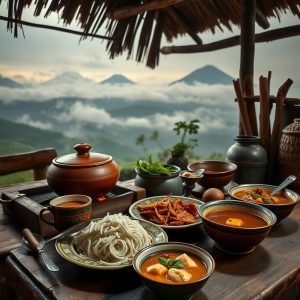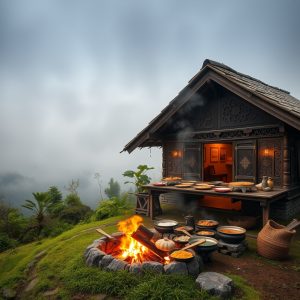
The Veil of Vapor and Velvet: How East Java’s Highland Flavors Cradle the Soul in Silence
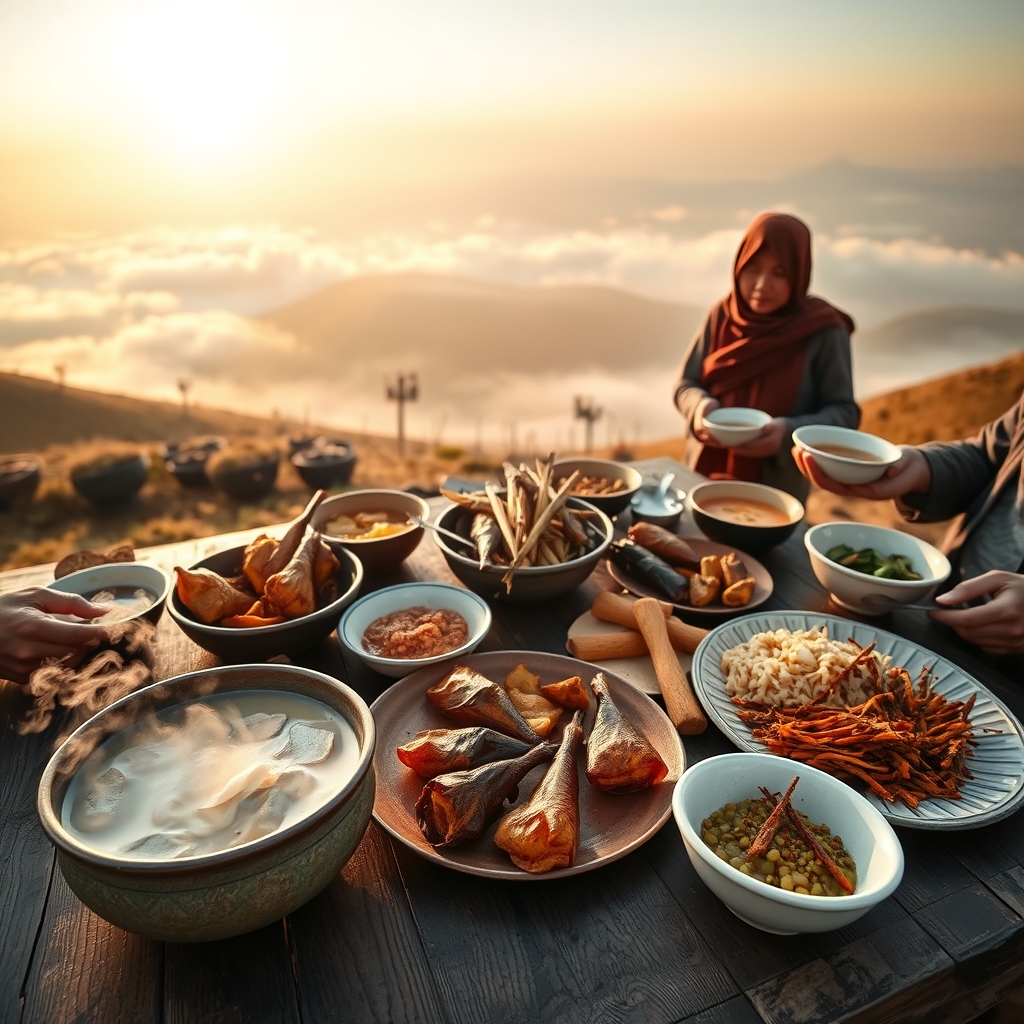
The first time I tasted Wedang Pokak Bromo, the world around me dissolved into the steam rising from my cup. It was not just a drink—it was a slow unraveling, a quiet revelation of how the highlands of East Java hold their secrets close, like a lover’s whispered promise. The ginger, lemongrass, and palm sugar swirled together in a dance that felt ancient, as if the very mist clinging to the slopes of Mount Bromo had condensed into something warm and golden. I cupped the ceramic between my palms, letting the heat seep into my bones, and for a moment, I understood why the people here speak of food not as sustenance, but as a language of the land.
The Whisper of Corn and Ember
There is a particular kind of silence that settles over the Tengger Caldera at dawn, a hush so profound it feels like the earth itself is holding its breath. It is in this silence that Bledhus Jagung Tengger is born—a dish so simple, yet so deeply tied to the rhythm of the highlands that it feels like a prayer. The corn, roasted over open flames until its edges char and curl, carries the scent of woodsmoke and damp earth. When I first bit into one, the kernels bursting with sweetness against the smoky crust, I thought of the farmers who tend these fields, their hands calloused from years of coaxing life from the volcanic soil. The corn is not just food; it is a testament to resilience, a quiet defiance against the harshness of the altitude.
And then there is Jagung Bakar Penanjakan, the corn roasted at the edge of the world, where the air is thin and the sunrise paints the sky in hues of rose and gold. Standing at the viewpoint, wrapped in a shawl against the morning chill, I watched as vendors pulled ears of corn from their makeshift grills, the husks blackened and brittle. The first bite was a revelation—juicy, smoky, with a hint of salt that lingered on the tongue like a memory. It was not just a snack; it was an experience, a communion with the land and the people who call it home.
The Alchemy of Smoke and Spice
If the highlands of East Java had a signature scent, it would be the aroma of Iga Pasir Bromo sizzling over hot coals. The ribs, marinated in a blend of turmeric, garlic, and shallots, are slow-cooked until the meat falls from the bone, tender and infused with the essence of the spices. The first time I tasted it, I was sitting on a wooden bench outside a roadside warung, the air thick with the scent of grilling meat and the distant rumble of the volcano. The flavors were bold, earthy, with a depth that spoke of generations of culinary tradition. It was not just a meal; it was a story, one that unfolded with every bite, revealing the soul of the highlands in layers of smoke and spice.
And then there is Sawut Kabut Bromo, a dish that feels like a warm embrace on a cold night. The cassava, grated and mixed with coconut milk and palm sugar, is steamed until it becomes a soft, fragrant pudding. The first spoonful melted on my tongue, a symphony of textures and flavors—creamy, sweet, with a hint of earthiness that grounded the dish in the soil of the highlands. It was comfort food in its purest form, a reminder that sometimes, the simplest dishes carry the most profound meanings.
The Language of Steam and Starlight
There is a magic in the way the people of East Java’s highlands transform humble ingredients into something extraordinary. Take Nasi Aron Tengger, for instance—a dish that feels like a love letter to the land. The rice, cooked with coconut milk and pandan leaves, is fragrant and slightly sticky, served with a variety of side dishes that showcase the bounty of the highlands. Each bite is a journey, a exploration of flavors that are at once familiar and exotic. It is not just a meal; it is a celebration, a way of honoring the earth and the hands that tend it.
And then there is Sego Sambel Tempong, a dish that packs a punch like the highland winds. The rice, served with a fiery sambal made from bird’s eye chilies, is a testament to the boldness of the people who call this place home. The first time I tried it, I was warned—”It’s spicy,” they said, but I underestimated the heat. The sambal burned my tongue, brought tears to my eyes, and yet, I couldn’t stop eating. It was not just a dish; it was a challenge, a dare to embrace the intensity of life in the highlands.
The Quiet Comfort of the Highlands
There is a certain kind of comfort that can only be found in the highlands of East Java, a warmth that seeps into your bones and lingers long after the meal is over. It is in the Angsle Hangat Bromo, a sweet drink made from glutinous rice balls, coconut milk, and palm sugar, served steaming hot in a ceramic bowl. The first sip was like a hug, a reminder that even in the coldest of nights, there is warmth to be found. It is in the Bakso Malang Komplit, a bowl of meatball soup so rich and flavorful that it feels like a celebration in every spoonful. And it is in the Cwie Mie Malang, a dish of noodles tossed in a savory sauce, topped with slices of pork and wonton, a testament to the fusion of cultures that have shaped this region.
But perhaps the most profound comfort is found in the quiet moments, in the shared meals and the stories told over steaming bowls of Rawon Nguling Pasuruan. The beef soup, dark as the night sky and rich with the flavors of keluak, is a dish that demands to be savored slowly, each spoonful a meditation on the flavors of the highlands. It is not just a meal; it is a ritual, a way of connecting with the land and the people who call it home.
The highlands of East Java are a place of contrasts—harsh yet nurturing, silent yet full of stories, rugged yet tender. The food here is a reflection of that duality, a blend of bold flavors and quiet comforts that speak to the soul. It is not just about the taste; it is about the experience, the connection, the way a simple meal can transport you to a place where the air is thin and the stars feel close enough to touch. And perhaps that is the true magic of the highlands—not just in the flavors, but in the way they cradle the soul in silence, like a secret whispered between the earth and the sky.