The Tenggerese Trail: A Sunrise Trekking Saga Through Mount Bromo’s Volcanic Tapestry

The first light of dawn creeps over the horizon like a slow-burning ember, painting the sky in hues of amber, rose, and gold. For those who stand on the edge of Mount Bromo’s vast caldera at this hour, the world feels suspended in time—a fleeting moment where earth and sky converge in a spectacle of raw, untamed beauty. This is not just a sunrise; it is a pilgrimage, a journey that weaves together the thrill of high-altitude trekking, the whispers of ancient traditions, and the humbling grandeur of one of Indonesia’s most iconic volcanic landscapes.
The Call of the Caldera
The journey to Mount Bromo begins long before the sun rises. As the clock strikes midnight, trekkers gather in the quiet highland village of Cemoro Lawang, where the air is crisp and the stars still dominate the sky. The Tenggerese people, the indigenous guardians of this land, have long revered Bromo as a sacred entity, a living force that demands respect and awe. Their traditions, passed down through generations, infuse every step of the expedition with a sense of reverence. Before setting foot on the trail, many pause to offer a silent prayer or a small token—a flower, a coin, or a handful of rice—into the caldera’s depths, a gesture of gratitude and humility.
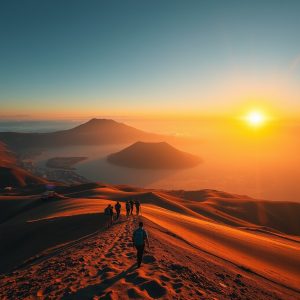
The trek itself is a masterclass in adaptive exploration. The paths here are not static; they shift with the seasons, the weather, and the whims of the volcano itself. Guides, often locals with an intimate knowledge of the terrain, lead the way along routes that wind through undulating sea of sands, across wooden planks laid over shifting dunes, and up the steep, ashen slopes of the crater’s edge. Each step is a negotiation with the land, a dance between human determination and nature’s unpredictable moods. The early morning chill gives way to a growing warmth as the sun climbs higher, and the landscape transforms from a monochrome dreamscape into a vibrant palette of ochre, rust, and deep volcanic black.
A Jeep Safari Through Time and Terrain
For those seeking a blend of adventure and cultural immersion, the Cultural Jeep Safari offers an unforgettable alternative. These rugged, open-air vehicles rumble through the Tengger Highlands, tracing a path that feels like a journey through time. The jeeps navigate the undulating terrain with ease, bouncing over rocky outcrops and skirting the edges of deep ravines, all while offering panoramic views of the surrounding peaks—Batok, Kursi, and the towering silhouette of Semeru, Java’s highest volcano, looming in the distance. The drivers, often Tenggerese themselves, share stories of the land, pointing out hidden shrines, sacred sites, and the remnants of ancient lava flows that tell the story of Bromo’s fiery past.
The safari culminates at a vantage point where the caldera unfolds in all its glory. Here, the sheer scale of the landscape is breathtaking. The crater of Mount Bromo, a gaping maw of sulfurous gases and jagged rock, sits at the heart of a vast, otherworldly plain. Steam rises from the earth in lazy curls, and the scent of sulfur hangs in the air—a reminder of the raw, untamed power that lies beneath the surface. For photographers, this is the moment of a lifetime, a chance to capture the interplay of light and shadow, of fire and earth, in a single, unforgettable frame.
The Heartbeat of the Highlands
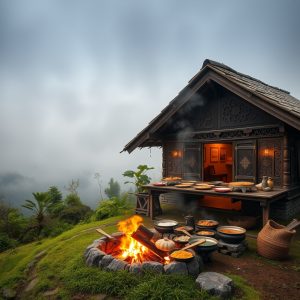
Beyond the physical challenges and visual splendors, what truly sets a Mount Bromo expedition apart is the opportunity to connect with the Tenggerese culture. The Tenggerese are a Hindu minority in predominantly Muslim Java, and their way of life is deeply intertwined with the rhythms of the volcano. Their villages, perched on the edges of the caldera, are a testament to resilience and harmony with nature. Traditional houses, built from wood and bamboo, blend seamlessly into the landscape, and the sound of gamelan music often drifts through the air during festivals and ceremonies.
One of the most profound experiences is witnessing the Yadnya Kasada festival, an annual event where the Tenggerese gather at the crater’s edge to offer sacrifices to the gods. Fruits, vegetables, livestock, and even money are thrown into the abyss as a gesture of gratitude and a plea for protection. The festival is a vibrant, chaotic, and deeply moving spectacle, a reminder of the enduring bond between the people and their land. Even outside of festival season, the spirit of the Tenggerese is palpable—whether in the warm smiles of the locals, the intricate batik patterns of their clothing, or the quiet pride with which they share their stories.
Sustainable Steps on Sacred Ground
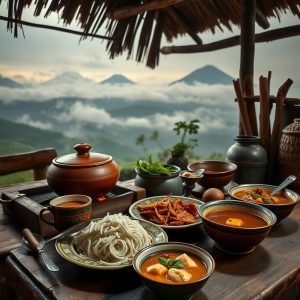
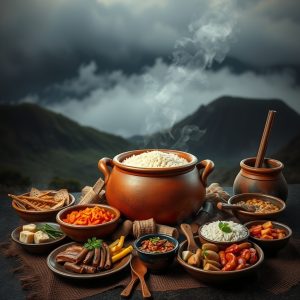
As the popularity of Mount Bromo grows, so too does the responsibility to protect its fragile ecosystem. Sustainable tourism is not just a buzzword here; it is a necessity. Eco-conscious trekkers are encouraged to follow the principles of Leave No Trace, sticking to designated paths, minimizing waste, and respecting the natural and cultural heritage of the area. Many tour operators now offer guided expeditions that prioritize sustainability, from using electric jeeps to supporting local communities through homestays and locally sourced meals. These efforts ensure that the magic of Bromo remains intact for future generations, allowing them to experience the same sense of wonder that has captivated travelers for centuries.
The journey to Mount Bromo is more than a trek; it is a transformation. It is a chance to step outside the boundaries of everyday life and immerse oneself in a world where nature’s power is on full display, where ancient traditions still thrive, and where every sunrise feels like a gift. As the first rays of light spill over the caldera, casting long shadows across the sea of sands, there is a moment of quiet reflection. The land has spoken, the gods have been honored, and the traveler, for a brief instant, has become part of something timeless. The memory of that moment lingers long after the descent, a silent promise to return to the heart of the volcano, where fire meets sky and dawn breaks over the edge of the world.