The Luminous Hush: How East Java’s Highland Flavors Carry the Weight of Dawn
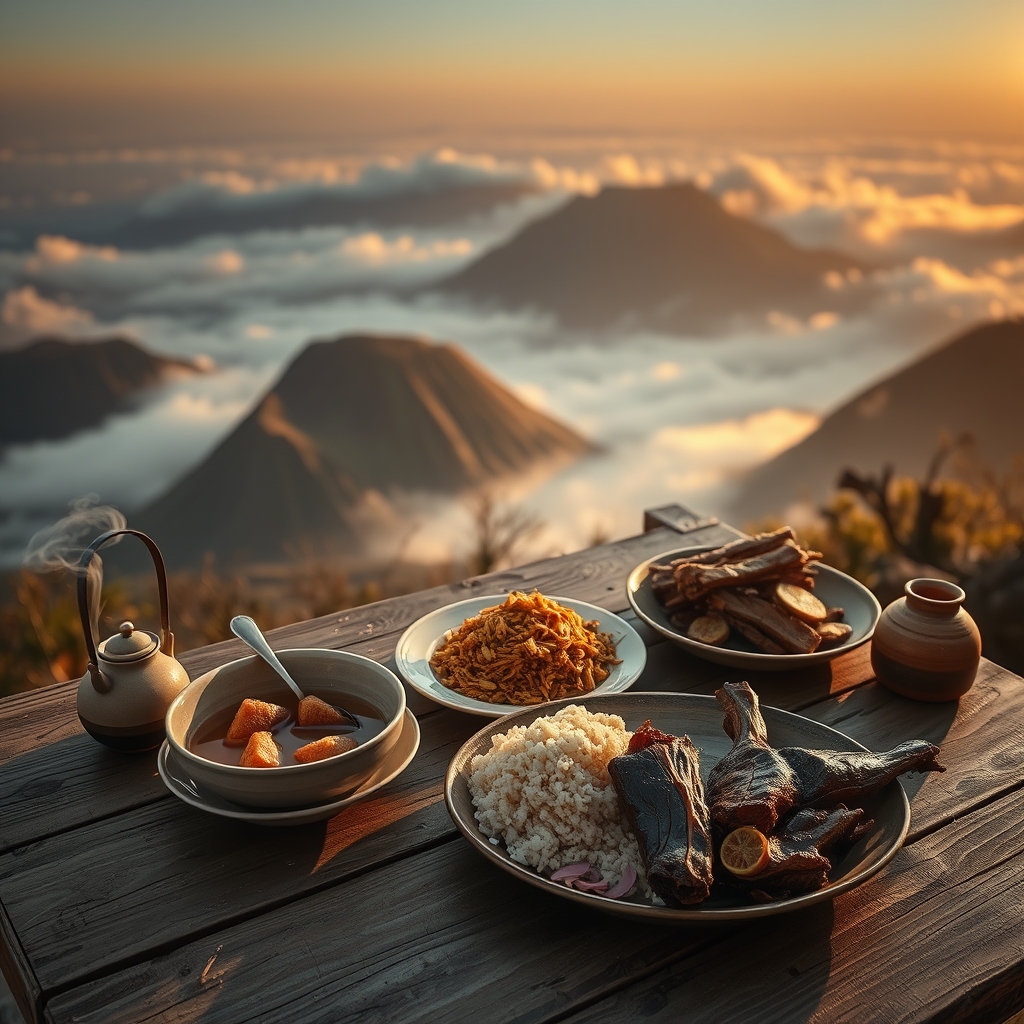
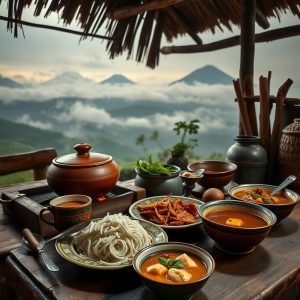
The first light over the Tengger Caldera does not arrive with a shout. It seeps—golden, hesitant—through the veil of mist that clings to the slopes like a memory half-remembered. There is no fanfare, no grand declaration. Only the quiet unfurling of warmth against the cold, the slow surrender of night to something softer, something that tastes like woodsmoke and promises kept. It is in this luminous hush that the flavors of the highlands begin to speak, not in words, but in the language of steam rising from a bowl of Wedang Pokak Bromo, its ginger and palm sugar dissolving the last remnants of the predawn chill.
The Alchemy of Altitude
Up here, where the air is thin and the earth hums with the latent energy of the volcano, food is not merely sustenance. It is a negotiation between the body and the land, a dialogue conducted in the currency of heat and spice. The Nasi Aron Tengger, a dish as unassuming as the people who prepare it, is a perfect example—steamed rice kissed by coconut milk, its grains plump and yielding, each one a tiny vessel for the stories of the soil. The Tenggerese, descendants of Majapahit royalty who sought refuge in these mountains, have long understood that flavor is not just about taste, but about the weight of history pressed into every grain.
And then there is the Iga Pasir Bromo, a dish that seems to carry the very essence of the highlands in its name. The ribs, slow-cooked until they fall from the bone, are not just meat but a metaphor—tender, resilient, shaped by the relentless pressure of time and fire. The sauce, a deep, earthy reduction of shallots, garlic, and a whisper of tamarind, clings to the ribs like the mist clings to the pines, both ephemeral and enduring. To eat it is to taste the patience of the mountains, the way they yield their secrets only to those willing to wait.
The Poetry of Impermanence
There is a fleeting quality to the flavors of the highlands, a sense that they exist only in the moment they are created. The Sawut Kabut Bromo, a dish of corn porridge swirled with coconut milk and topped with crispy shallots, is best eaten at dawn, when the mist still lingers and the world feels suspended between dreams. The corn, ground coarse and uneven, retains a stubborn texture, a reminder that perfection is not the goal—authenticity is. The shallots, fried to a delicate crisp, dissolve on the tongue like the last notes of a song, leaving behind a silence that is somehow fuller than the sound that preceded it.
Even the snacks here carry this sense of impermanence. The Keripik Kentang Sukapura, thin slices of potato fried to a golden crisp, are at their best when eaten straight from the wok, their edges still curling from the heat. The Bledhus Jagung Tengger, a simple grilled corn on the cob slathered with spiced margarine, is a study in contrasts—charred and sweet, smoky and bright, a fleeting pleasure that demands to be savored before the wind carries it away. These are not dishes meant to be hoarded or preserved. They are meant to be experienced, fully and without reservation, in the brief window of time when they are at their most alive.
The Warmth of Shared Silence
Perhaps it is the altitude, or perhaps it is the quiet that settles over the highlands like a blanket, but there is a sense of communion in the act of eating here that feels different from anywhere else. Meals are not rushed. There are no hurried bites taken between tasks, no plates cleared away before the last morsel has been savored. Instead, there is a shared stillness, a collective pause in the rhythm of the day, as if everyone has agreed, without words, to let the food do the talking.
In Malang, the Bakso Bakar sizzles on the grill, its meatballs charred at the edges, their interiors still juicy and tender. The smoke curls into the evening air, mingling with the laughter of strangers who have become companions for the duration of the meal. Nearby, a bowl of Cwie Mie Malang waits, its noodles slick with oil, its broth rich with the depth of slow-cooked pork. The dish is a paradox—simple in its ingredients, yet complex in its layers of flavor, much like the people who call these highlands home.
And then there is the Angsle Hangat Bromo, a warm drink that is less about the ingredients—glutinous rice balls, sweet potatoes, peanuts, and coconut milk—and more about the way it feels in the hands. The ceramic bowl is warm, almost hot, a small comfort against the chill of the night. To drink it is to be reminded that warmth is not just something we seek, but something we create, together, in the shared spaces between strangers.
The Unseen Threads That Bind
It is easy to think of these dishes as separate entities, each with its own story, its own place in the tapestry of East Java’s highland cuisine. But to do so would be to miss the unseen threads that connect them—the way the smoke from a Jagung Bakar Penanjakan drifts into the same sky that cradles the steam from a pot of Rawon Nguling Pasuruan, the way the sweetness of Wedang Ronde lingers on the tongue long after the last sip, echoing the caramelized notes of Sego Sambel Tempong. These flavors are not isolated. They are part of a larger conversation, one that has been unfolding for centuries, carried on the wind and passed down through generations.
The highlands do not give up their secrets easily. They demand patience, attention, a willingness to listen not just with the ears, but with the heart. And when they do reveal themselves, it is not in grand gestures, but in the quiet moments—the first bite of Nasi Empok Malang, its rice pressed into a compact cake, its flavors concentrated and intense; the crunch of Mendol Tempe Krispi, its fermented soybeans transformed into something light and airy, a testament to the magic of simplicity. These are the flavors that stay with you, long after the mist has lifted and the journey home has begun.
The light over the Tengger Caldera may fade, but the warmth of its flavors lingers, a quiet ember in the chest. It is a warmth that does not shout, does not demand attention, but simply exists, steady and sure, like the mountains themselves. And perhaps that is the greatest secret of all—that the most profound flavors are not the ones that dazzle, but the ones that endure, carried within us like the memory of a place we have never truly left.