The Embrace of Ember and Earth: Tasting the Quiet Resilience of East Java’s Plateau Kitchens

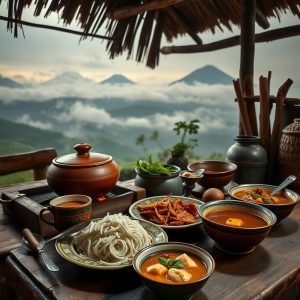
The first time I held a bowl of Wedang Pokak Bromo in my hands, the steam curled like the breath of the mountain itself—warm, insistent, alive. The air was thin up there, where the clouds brushed the edges of the plateau like curious fingers, and the scent of ginger and palm sugar rose in slow, deliberate spirals. It was not just a drink; it was a conversation between the earth and the body, a quiet negotiation of warmth in the face of the highland’s relentless chill. The Tengger people, guardians of these mist-laden slopes, have long understood that food is not merely sustenance here—it is survival, memory, and prayer, all stirred into one.
The Language of Ash and Grain
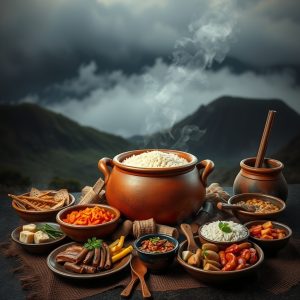
There is something sacred in the way the people of Bromo’s highlands coax flavor from the land. The Nasi Aron Tengger, for instance, is not just rice—it is rice kissed by smoke, by the slow burn of wood fires that have simmered for generations. The grains are steamed until they glow, then tossed with shredded coconut and a whisper of salt, as if the cook is offering a quiet apology to the earth for taking its bounty. The dish arrives in banana leaves, still warm, still humming with the echoes of the hearth. To eat it is to taste the patience of the highlands, the way time moves differently here, measured not in hours but in the slow accumulation of embers.
The Bledhus Jagung Tengger tells a similar story. Corn, that humble golden grain, is roasted over open flames until its edges blacken and curl, releasing a scent that is at once smoky and sweet. The kernels are then ground into a coarse flour, mixed with coconut milk and a touch of salt, and shaped into small, rustic cakes. They are not elegant; they are honest. Each bite carries the weight of the field where the corn grew, the hands that harvested it, the fire that transformed it. There is no pretense here, only the unspoken understanding that food, like life, is best when it is simple and true.
The Whisper of the Wind in Every Bite
Up here, where the wind howls like a restless spirit, even the snacks carry the soul of the plateau. Keripik Kentang Sukapura, thin slices of potato fried to a delicate crisp, are more than a mere accompaniment to tea. They are the sound of the wind made edible, a crunch that echoes the rustling of the pines and the distant murmur of the volcano. The potatoes are grown in the rich, volcanic soil, their flesh sweet and earthy, their texture a testament to the care of the farmers who tend them. To eat them is to hear the highlands sing.
And then there is Sawut Kabut Bromo, a dish that feels like a secret shared between the mountain and those who call it home. Cornmeal, cassava, and sweet potatoes are steamed together, their flavors melding into something greater than the sum of their parts. The result is a porridge-like concoction, hearty and unassuming, served with a dollop of coconut milk and a sprinkle of salt. It is the kind of dish that warms you from the inside out, the kind that makes you feel, for a moment, as though you are part of the land itself.
The Alchemy of Smoke and Time
Perhaps it is the altitude, or perhaps it is the quiet resilience of the people who live here, but there is a depth to the flavors of East Java’s highlands that is difficult to find elsewhere. Take Iga Pasir Bromo, for example—a dish of beef ribs slow-cooked in a fragrant broth of spices, their meat falling off the bone in tender surrender. The name, which translates to “sand ribs,” is a nod to the volcanic sand that blankets the slopes of Bromo, a reminder that even in the harshest of environments, life—and flavor—finds a way to thrive.
The Bakso Bakar Malang is another revelation. Meatballs, usually served in a clear broth, are here grilled over charcoal until their edges caramelize, their interiors remaining juicy and succulent. The smoky aroma mingles with the scent of the grill, creating a perfume that is at once comforting and intoxicating. It is a dish that speaks of gatherings, of laughter shared under the vast, star-strewn sky, of the simple joy of coming together.
The Unseen Hands Behind the Flame
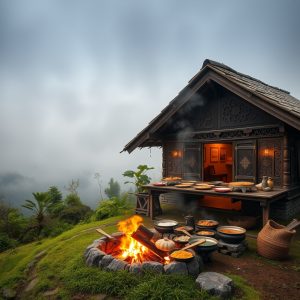
Behind every dish is a story, and behind every story is a person—or many people—whose hands have shaped the flavors we taste. The women who prepare Angsle Wedang Ronde, a sweet, spiced drink filled with chewy rice balls, do so with a quiet reverence, as though each ingredient is a prayer. The men who tend the fires for Jagung Bakar Penanjakan, roasting corn over open flames until the kernels blister and pop, do so with a patience that borders on devotion. These are not just acts of cooking; they are acts of love, of connection, of passing down a legacy from one generation to the next.
Even the simplest of dishes, like Orem Orem Tempe, a crispy fried tempeh snack, carries the weight of tradition. The tempeh is sliced thin, marinated in a blend of spices, and fried until golden, its edges curling like the pages of an old book. It is a snack that demands to be eaten slowly, savored, each bite a reminder of the hands that prepared it, the land that nurtured it, the fire that transformed it.
The highlands of East Java do not shout their flavors; they whisper them, like secrets passed between friends. They do not demand attention; they earn it, through the quiet insistence of their warmth, their depth, their unshakable connection to the land. To taste them is to be invited into a world where food is not just something you eat, but something you feel—something that lingers, long after the last bite, like the echo of a song you can’t quite forget. The steam rises, the embers glow, and for a moment, you are not just a visitor to this place. You are part of it, woven into the fabric of its stories, its flavors, its quiet, enduring resilience.