The Hush of Embers and the Song of the Soil: East Java’s Highland Flavors in the Quiet Hours

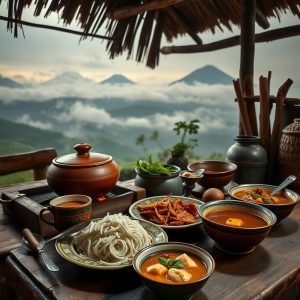
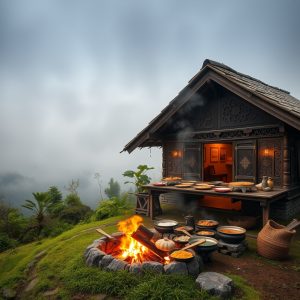
The highlands of East Java breathe in rhythms older than memory, where the air is thick with the scent of damp earth and the slow, smoldering promise of woodsmoke. Here, between the folds of Bromo’s mist-laden slopes and the quiet villages clinging to the edges of the sky, food is not merely sustenance—it is a language spoken in the hush of embers, a conversation between the land and those who tend it. To sit at a table here is to listen, not just with the ears, but with the skin, the bones, the very pulse of longing that stirs when the first bite touches the tongue.
The Whisper of Grains and the Weight of Steam
There is a moment, just before dawn, when the world holds its breath. The farmers of Tengger rise with the dark, their hands already reaching for the grains that have sustained them for generations. Nasi Aron Tengger, a dish of such humble grace, is more than rice and side dishes—it is the quiet defiance of those who wake before the sun to coax life from the soil. The rice, steamed to a delicate firmness, is often accompanied by sambal that carries the heat of the earth itself, a reminder that even in stillness, there is fire. The steam rises in lazy curls, as if the very act of cooking is a meditation, a slow unspooling of time.
And then there is Wedang Pokak Bromo, a drink that tastes of warmth and whispered secrets. The ginger, pounded to release its soul, mingles with palm sugar and the faintest hint of citrus, a concoction that seems to carry the essence of the highlands in every sip. It is the kind of drink that lingers, not just on the tongue, but in the memory, a fleeting comfort against the chill of the morning air.
The Earth’s Slow Roast: Meats and Roots in the Embrace of Smoke
In the shadow of Bromo’s crater, where the air is thin and the light slants golden, the people have learned to let the land dictate their flavors. Iga Pasir Bromo, ribs slow-cooked in sand until the meat falls from the bone like a sigh, is a testament to patience. The sand, heated by the earth’s own breath, cradles the meat in a gentle, even warmth, coaxing out flavors that are at once smoky and sweet, as if the volcano itself has lent its voice to the dish. There is no rush here, no urgency—only the slow, steady alchemy of heat and time.
And then, the Sawut Kabut Bromo, a dish of cassava and jackfruit, shredded and simmered until the textures blur into something almost dreamlike. It is the taste of fog settling over the fields, of hands that have known the weight of harvests and the quiet joy of a meal shared in silence. The dish is simple, unadorned, yet it carries the weight of generations, a reminder that the most profound flavors are often the ones that require the least embellishment.
The Crisp and the Tender: A Dance of Textures
There is a poetry in the contrast of textures, in the way something crisp can give way to something tender, like the first crack of dawn yielding to the soft light of morning. Keripik Kentang Sukapura, thin slices of potato fried to a golden crisp, are the kind of snack that demands to be eaten slowly, each bite a small celebration of the earth’s bounty. The potatoes, grown in the cool highland soil, carry a sweetness that is almost floral, a whisper of the mountains in every mouthful.
And then, the Mendol Tempe Krispi, a dish that marries the nutty depth of tempeh with the satisfying crunch of a well-fried exterior. It is a dish of contradictions—soft yet firm, rich yet light—and in that tension, there is a kind of magic. It is the kind of food that makes you pause, that makes you appreciate the simple act of eating, of tasting, of being present in the moment.
The Night’s Warm Embrace: Soups and Sweets That Hold the Dark at Bay
As the sun dips below the horizon and the highlands are swallowed by the dark, the tables of East Java come alive with the glow of lanterns and the steam of simmering pots. Angsle Hangat Bromo, a sweet soup of glutinous rice balls, coconut milk, and palm sugar, is the kind of dish that warms from the inside out. It is the taste of home, of childhood, of the quiet comfort that comes from knowing you are exactly where you are meant to be. The first spoonful is like a hug, a reminder that even in the coldest nights, there is warmth to be found.
And then, the Bakso Malang Komplit, a bowl so rich in texture and flavor that it feels like a meal in itself. The meatballs, tender and juicy, float in a broth that has been simmered for hours, infused with the essence of spices and the slow, steady love of the cook. Each bite is a revelation, a reminder that the best meals are not just eaten but experienced, savored, remembered.
The Last Light of the Highlands: A Cup of Memory
In the quiet hours of the evening, when the last traces of daylight have faded and the stars begin to prick through the velvet sky, there is nothing quite like a cup of Kopi Asli Amstirdam. The coffee, grown in the highlands and roasted to perfection, carries the depth of the earth and the brightness of the sky in every sip. It is the kind of coffee that lingers, that invites you to sit a little longer, to breathe a little deeper, to let the weight of the day melt away in the warmth of the cup.
The highlands of East Java are not just a place but a feeling, a state of being that lingers long after the last bite has been eaten, the last sip has been taken. Here, food is more than nourishment—it is a conversation with the land, a dialogue between the past and the present, a quiet celebration of the moments that make life worth living. The flavors are not just tasted but felt, not just eaten but remembered, like the echo of a song that lingers in the heart long after the music has faded.