The Alchemy of Smoke and Spice: Unearthing the Soul of East Java’s Culinary Highlands
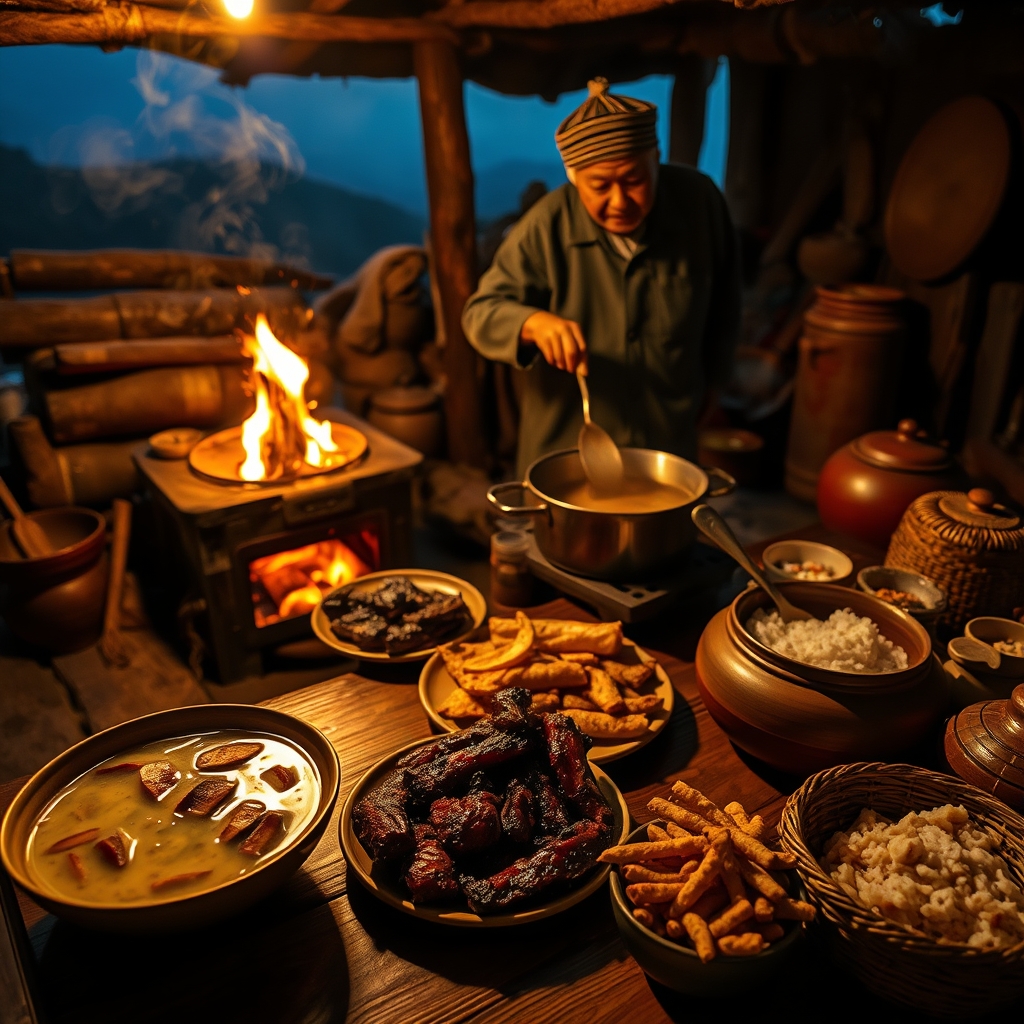
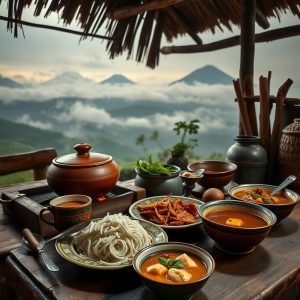
The first time I tasted Nasi Aron Tengger, the rice was still warm, its grains clinging to one another like old friends reluctant to part. The scent of charred coconut husks lingered in the air, a ghostly whisper of the fire that had kissed the grains into submission. It was not just a meal; it was a conversation between earth and ember, a dialogue spoken in the language of smoke and slow-cooked patience. The Tenggerese people, guardians of these mist-laden highlands, have long understood that food is not merely sustenance—it is memory, ritual, and resistance against the forgetting of time.
The Volcano’s Breath in Every Bite
To eat in the shadow of Mount Bromo is to taste the very breath of the volcano. The Wedang Pokak Bromo, a spiced herbal drink, arrives steaming in a clay cup, its golden hue reminiscent of the dawn that spills over the caldera. The warmth is not just in the hands that cradle the vessel, but in the way the ginger and lemongrass seem to thaw the chill of the highland air, as if the mountain itself has exhaled into the brew. There is a quiet defiance in this warmth, a reminder that even in the coldest, most desolate landscapes, life persists—stubborn, sweet, and slightly bitter.
The Iga Pasir Bromo, ribs slow-cooked in a pit of volcanic sand, carry the same defiance. The meat, falling from the bone with the gentlest nudge, is infused with the smoky essence of the earth. It is said that the Tenggerese bury their offerings to the gods in these sands, and perhaps the ribs, too, are a kind of offering—a sacrifice of flavor to the land that cradles them. Each bite is a communion with the volcano, a fleeting connection to something ancient and untamed.
The Poetry of Impermanence
There is a fleeting quality to the foods of the highlands, as if they are aware of their own ephemeral nature. The Sawut Kabut Bromo, a dish of grated young jackfruit tossed with spices and coconut, is best eaten fresh, its crisp texture yielding to the softness of the morning mist. It is a dish that refuses to be preserved, much like the mist itself, which dissipates with the first touch of sunlight. To eat it is to acknowledge the beauty of transience, to savor the moment before it slips away.
Even the Keripik Kentang Sukapura, thin slices of potato fried to a delicate crisp, seem to dissolve on the tongue like the last notes of a song. They are a testament to the art of imperfection—each chip unique, some slightly burnt at the edges, others curled like the pages of a well-loved book. There is no uniformity here, only the honest, unfiltered expression of the land that bore them.
The Language of Longing
Some flavors are not just tasted but felt, like the ache of a half-remembered dream. The Nasi Empok Malang, a dish of compressed rice served with fried shallots and spicy sambal, is one such flavor. It is simple, unassuming, yet it carries the weight of nostalgia. The rice, pressed into a dense cake, is a metaphor for the way memory compresses time—some moments sharp and vivid, others blurred at the edges. To eat it is to unravel those layers, to sift through the past with each bite.
The Cwie Mie Malang, a noodle dish steeped in history, tells a different kind of story. The noodles, chewy and resilient, are a testament to the endurance of the people who created them. The broth, rich with the umami of slow-cooked meat, is a liquid archive of generations. It is said that the dish was born from the resourcefulness of Chinese immigrants in Malang, who adapted their recipes to the ingredients of their new home. To eat it is to taste the blending of cultures, the quiet alchemy of adaptation and belonging.
The Fire That Binds
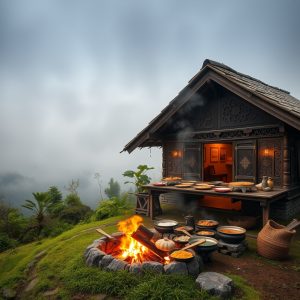
In the highlands, fire is more than a tool—it is a storyteller. The Bakso Bakar Malang, skewered meatballs grilled over an open flame, crackle with the same energy as the stories shared around the fire. The charred edges, the smoky aroma, the way the fat drips onto the coals with a hiss—it is a performance, a dance between heat and hunger. The Tenggerese believe that fire carries prayers to the gods, and perhaps each sizzle is a whispered plea for abundance, for warmth, for connection.
The Jagung Bakar Penanjakan, corn roasted over embers until its kernels burst with sweetness, is another kind of offering. The smoke curls into the sky like incense, carrying the scent of the harvest to the heavens. To eat it is to partake in a ritual older than memory, to feel the pulse of the land in the palm of your hand.
The Silence Between the Flavors
Not all flavors are loud. Some are quiet, like the Bledhus Jagung Tengger, a steamed corn cake so soft it melts on the tongue. It is a flavor that lingers in the background, a gentle hum beneath the symphony of spices. It is the taste of home, of childhood, of the moments in between the chaos of life. To eat it is to remember that not all beauty demands attention—some of it simply is, steady and unassuming, like the mountains themselves.
The Angsle Hangat Bromo
, a warm dessert of glutinous rice balls in coconut milk, is another quiet pleasure. It is comfort in its purest form, a sweetness that does not cloy but soothes. The Tenggerese serve it on cold nights, when the wind howls through the valleys like a restless spirit. It is a reminder that warmth can be found even in the darkest hours, that kindness is a flavor all its own. There is a moment, just after the last bite, when the flavors still echo on the tongue, when the memory of the meal is still fresh. It is in this silence that the true essence of East Java’s highland cuisine reveals itself—not in the grand gestures, but in the small, unguarded moments. The way the steam rises from a bowl of Rawon Nguling Pasuruan, its dark broth rich with the earthiness of keluak. The crunch of Mendol Tempe Krispi, its golden crust giving way to the tender heart of fermented soybeans. The first sip of Kopi Asli Amstirdam, its bitterness tempered by the sweetness of palm sugar, a taste that lingers like a promise. These are the flavors that stay with you, long after the plates have been cleared, the stories shared, the fires burned low. They are the flavors of a land that refuses to be forgotten, of a people who understand that the most profound truths are often spoken in the language of food.