Bromo’s Volcanic Veil: How Accommodation Design Shapes the Traveler’s Perception of Wilderness

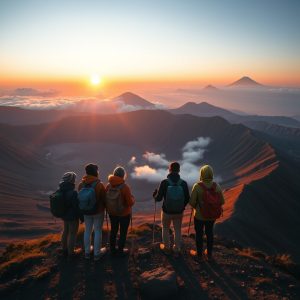
The raw, untamed beauty of Mount Bromo is not merely a visual spectacle—it is an emotional and psychological experience. The jagged edges of the Tengger Caldera, the ethereal mist curling over the Sea of Sand, and the distant rumble of the volcano itself create a landscape that feels both primordial and fragile. Yet, the way travelers engage with this wilderness is profoundly mediated by where they stay. The architecture, ambiance, and even the marketing of Bromo’s accommodations do not just frame the experience; they redefine it, often blurring the line between immersion and intervention.
The Illusion of Proximity: When Distance Becomes a Design Choice
Properties like Jiwa Jawa Resort Bromo and Plataran Bromo Resort are masters of spatial illusion. Perched on the edges of the caldera, they offer panoramic views that make the volcano appear deceptively close, as if one could reach out and touch the sulfurous plumes. Yet, this proximity is carefully curated. Floor-to-ceiling windows, elevated terraces, and strategically placed infinity pools create a sense of intimacy with the landscape while maintaining a safe, controlled distance. The effect is paradoxical: travelers feel connected to Bromo’s wildness, yet the very design of these resorts ensures they never truly step into it.
This calculated intimacy raises questions about authenticity. Does the traveler’s experience of Bromo’s grandeur become diluted when filtered through glass and steel? Or does this architectural mediation enhance appreciation by framing the landscape as a living painting? The answer lies not in the design itself, but in the expectations it sets—and whether those expectations are met with honesty or artifice.
The Minimalist Mirage: Capsule Hotels and the Myth of Efficiency
On the opposite end of the spectrum, properties like Whiz Capsule Hotel Grand Bromo and Cafe Lava Hostel sell efficiency as an aesthetic. The promise is simple: a no-frills, functional space that prioritizes location over luxury. Yet, the reality is more complicated. Capsule hotels, in particular, are often marketed as a futuristic, space-saving solution for budget travelers, but in Bromo’s context, they risk feeling like an afterthought—an attempt to capitalize on the destination’s popularity without contributing to its narrative.
The issue is not the concept itself, but the execution. When a capsule pod is little more than a glorified bunk bed with a power outlet, it strips away the romance of travel. Bromo’s allure is not just in its accessibility; it is in its ability to make visitors feel small in the face of nature’s grandeur. A cramped, utilitarian pod does little to foster that sense of awe. Instead, it reduces the experience to a transaction: pay, sleep, leave. The question then becomes whether these accommodations are serving the traveler or merely exploiting their willingness to endure discomfort for the sake of proximity.
The Homestay Paradox: Intimacy vs. Exploitation
Homestays like GubuKNDeso Homestay Bromo and De Potrek Bistro And Homestay occupy a unique space in Bromo’s hospitality landscape. They offer an unfiltered glimpse into local life, often with warm, personalized service that larger resorts cannot replicate. Yet, this intimacy comes with its own set of ethical ambiguities. Are these homestays genuinely preserving local culture, or are they commodifying it for tourist consumption? The line is thin, and the answer often depends on the traveler’s perspective.
For some, the charm of a homestay lies in its imperfections: the creaky floorboards, the home-cooked meals, the lack of modern amenities. For others, these same qualities are dealbreakers, a sign that the accommodation is not up to par with their expectations. The challenge for homestays is to strike a balance—offering authenticity without romanticizing poverty, and comfort without erasing cultural identity. When done well, they can provide a more meaningful connection to Bromo than any luxury resort. When done poorly, they risk becoming a caricature of the very culture they claim to represent.
The Unseen Hand: How Marketing Shapes Expectations
The most insidious influence on a traveler’s perception of Bromo is not the architecture or the service, but the marketing. Properties like Lava View Lodge and Hotel Santika Pasuruan are sold as gateways to adventure, their websites and brochures filled with images of sunrise treks, misty craters, and cozy fireplaces. Yet, the reality often falls short. The sunrise may be obscured by clouds, the trek more grueling than anticipated, and the fireplace nothing more than a decorative prop.
This disconnect between expectation and reality is not unique to Bromo, but it is amplified by the destination’s inherent unpredictability. A volcano is, by nature, volatile. Weather patterns shift rapidly, and the landscape is in a constant state of flux. Accommodations that promise a seamless, Instagram-perfect experience are setting travelers up for disappointment. The most successful properties are those that acknowledge this unpredictability, framing their offerings not as guarantees, but as invitations to engage with the unknown.
The Silent Architects: How Staff Define the Stay
No amount of design or marketing can compensate for the human element of hospitality. The staff at Bromo’s accommodations—from the front desk clerks at Swiss Belinn Malang to the guides at Jiwa Jawa Resort Ijen—are the silent architects of the traveler’s experience. Their knowledge, warmth, and willingness to go beyond the script can transform a stay from ordinary to extraordinary. Conversely, indifference or incompetence can sour even the most luxurious of settings.
The best staff members understand that they are not just providing a service; they are curating an experience. They know when to offer advice and when to step back, when to share a local legend and when to let the landscape speak for itself. In a destination like Bromo, where nature is the main attraction, the role of the staff is not to overshadow it, but to enhance it—subtly, thoughtfully, and without pretense.
The accommodations of Mount Bromo are more than just places to sleep; they are the lenses through which travelers view the landscape. Whether through the sleek minimalism of a capsule hotel, the curated intimacy of a luxury resort, or the raw authenticity of a homestay, each property shapes the narrative of the journey. The danger lies in mistaking the frame for the picture—believing that the design, the marketing, or even the service can replace the visceral experience of standing on the edge of a volcano at dawn. The best accommodations understand this distinction. They do not seek to control the experience, but to facilitate it, offering travelers the tools to engage with Bromo on their own terms. In the end, the most memorable stays are not those that promise perfection, but those that embrace imperfection—acknowledging that the true magic of Bromo lies not in the comforts of a room, but in the wild, untamed heart of the mountain itself.