Fireside Feasts: The Warmth of East Java’s Highland Comforts
The first time I tasted Wedang Pokak Bromo, the steam curled into the cold mountain air like a whispered secret, as if the very earth of Tengger was exhaling its stories into my cup. It was not just a drink—it was an embrace. The ginger’s sharp warmth cut through the mist that clung to my skin, while the palm sugar dissolved like memories on my tongue, sweet and fleeting. Around me, the highlands stretched in quiet grandeur, their slopes draped in silver fog, and I understood then why food here is never just sustenance. It is solace.
The Alchemy of Altitude
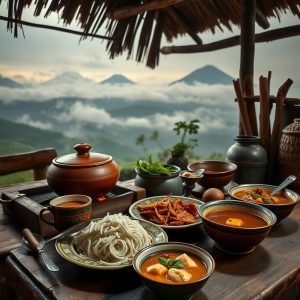
There is something about the thin, crisp air of the highlands that transforms the simplest ingredients into something profound. Take Nasi Aron Tengger, for instance—a humble dish of rice steamed in bamboo, its grains infused with the smoky breath of the forest. The Tenggerese people, descendants of the ancient Majapahit, have long known that food must nourish more than the body; it must fortify the spirit against the chill of isolation. The rice, sticky and fragrant, is often served with iga pasir, beef ribs slow-cooked until the meat surrenders to the bone, falling apart like the last leaves of autumn. The name—”sand ribs”—hints at the volcanic soil that cradles these lands, its minerals seeping into the meat, lending it a depth of flavor that lingers long after the last bite.
And then there is Sawut Kabut Bromo, a dish that feels like a love letter to the earth itself. Made from grated cassava, the texture is both rustic and delicate, a paradox that mirrors the highlands: harsh yet tender, unforgiving yet generous. The cassava is mixed with coconut milk and spices, then steamed until it achieves a custard-like consistency. It is often eaten with sambal so fiery it could wake the dead, a reminder that even in the coldest of places, life persists in vibrant, unapologetic bursts.
The Language of Spice and Smoke
If the highlands speak in whispers, then the lowlands of Malang and Probolinggo shout in a symphony of spices. Cwie Mie Malang, for example, is not merely a bowl of noodles—it is a declaration. The noodles, springy and pale, swim in a broth so rich it could be mistaken for liquid gold. Topped with slices of tender pork or chicken, wontons, and a sprinkle of fried shallots, each spoonful is a revelation. The dish was born from the Chinese diaspora that settled in Malang, and yet, it has become unmistakably Javanese, a testament to the way cultures intertwine like vines on an ancient tree.
Nearby, in the bustling streets of Malang, Bakso Bakar sizzles on grills, its smoky aroma drawing crowds like moths to a flame. The meatballs, charred on the outside and juicy within, are skewered and basted with a sweet and savory sauce that caramelizes under the heat. It is street food at its most primal—simple, unpretentious, and utterly addictive. The first time I bit into one, the flavors exploded in my mouth like fireworks, a celebration of life’s small, fleeting pleasures.
The Sweetness of Simplicity
Not all comfort comes in bold, fiery packages. Sometimes, it arrives in the quiet crunch of Keripik Kentang Sukapura, thin slices of potato fried to a golden crisp, their edges curled like the pages of an old book. The potatoes are grown in the fertile soils of Sukapura, where the air is cool and the sun gentle. Each chip is a bite of nostalgia, a reminder of childhood afternoons spent snacking under the shade of a mango tree. The simplicity of the dish belies its perfection—there is nothing to hide behind, no sauce to mask imperfections. Just potato, oil, and salt, transformed by fire into something magical.
Then there is Bledhus Jagung Tengger, a snack that feels like a gift from the gods. Grated corn is mixed with coconut and palm sugar, then steamed in banana leaves until it becomes a dense, sweet cake. The texture is somewhere between pudding and bread, and the flavor is pure, unadulterated joy. It is often eaten during harvest festivals, a symbol of gratitude for the earth’s bounty. I remember sitting on a wooden bench in a Tenggerese village, sharing a piece with an elderly woman who told me stories of her youth. The cake was warm in my hands, its sweetness seeping into my fingers, and for a moment, I felt like I was part of something ancient and enduring.
The Ritual of Warmth
In the highlands, where the nights grow long and the cold seeps into your bones, warmth is not just a sensation—it is a ritual. Angsle Hangat Bromo is a drink that embodies this truth. A sweet concoction of glutinous rice balls, peanuts, and coconut milk, it is served piping hot, the steam rising like incense from a temple. The first sip is a shock to the system, a jolt of sweetness that spreads through your body like sunlight breaking through clouds. It is often enjoyed in the early hours of the morning, as the sun rises over Mount Bromo, painting the sky in hues of pink and gold. There is something sacred about that moment—the quiet, the warmth, the sense of being exactly where you are meant to be.
And what of Jagung Bakar Penanjakan? Grilled corn, its kernels charred and glistening with butter, sold by vendors who brave the cold to bring a taste of comfort to the masses. The corn is grown in the fertile valleys below Penanjakan, where the soil is rich and the water plentiful. Each ear is a masterpiece, its sweetness intensified by the fire, its smokiness a reminder of the volcano’s ever-present breath. I have eaten it standing on the edge of the caldera, the wind whipping through my hair, the taste of the corn mingling with the scent of sulfur and earth. It was not just a snack—it was a communion with the land itself.
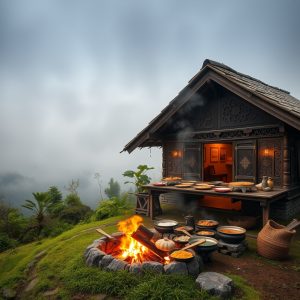
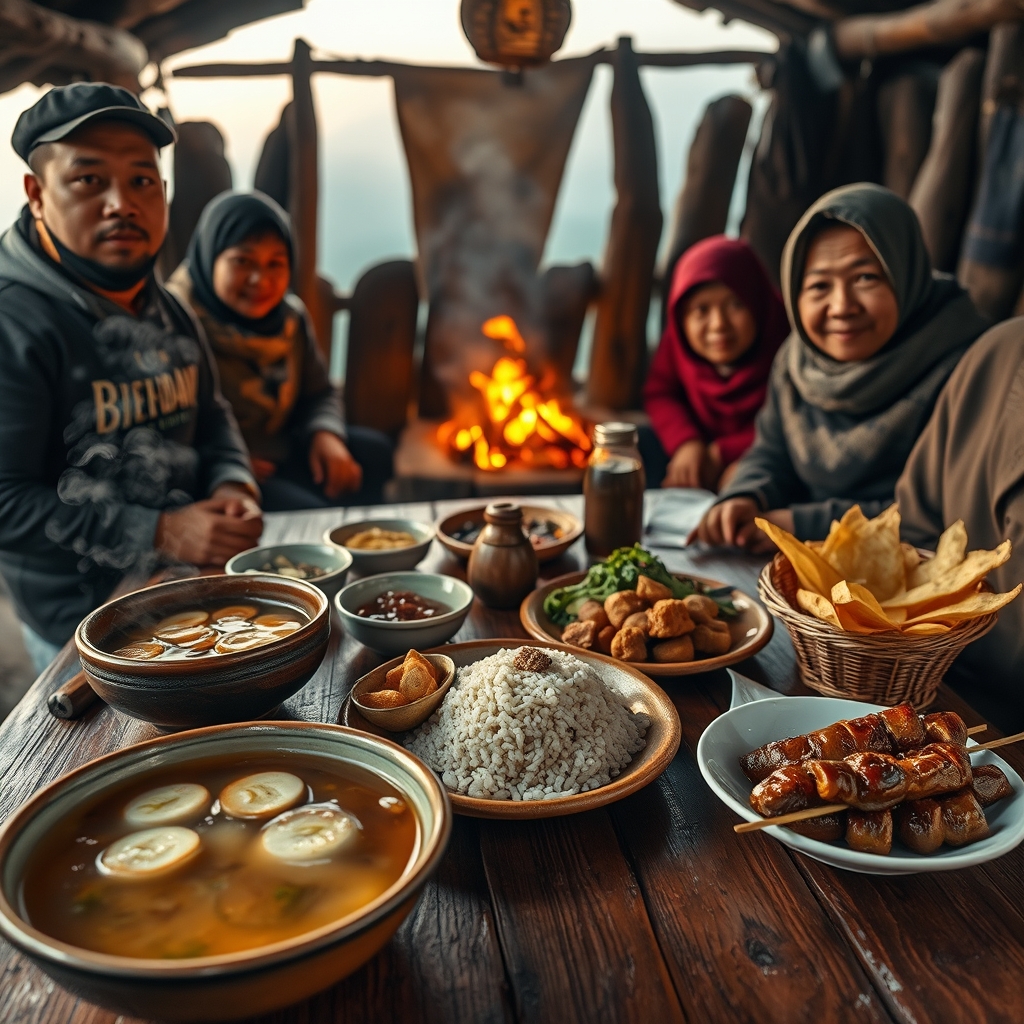
There is a saying in East Java: “Mangan ora mangan, sing penting kumpul.” It means, “Whether we eat or not, what matters is that we gather.” The food here is more than just dishes on a plate; it is the glue that binds communities, the language that transcends words. It is the warmth of a shared meal on a cold night, the laughter of friends gathered around a fire, the quiet understanding that no matter how far we wander, there is always a taste of home waiting for us. The highlands may be harsh, the winds may howl, and the nights may grow long, but in the steam rising from a bowl of Wedang Pokak or the smoky aroma of Bakso Bakar, there is always a fire to gather around, a story to share, and a memory to keep.