The Quiet Symphony of Smoke and Spice: A Highland Reverie in East Java’s Culinary Soul
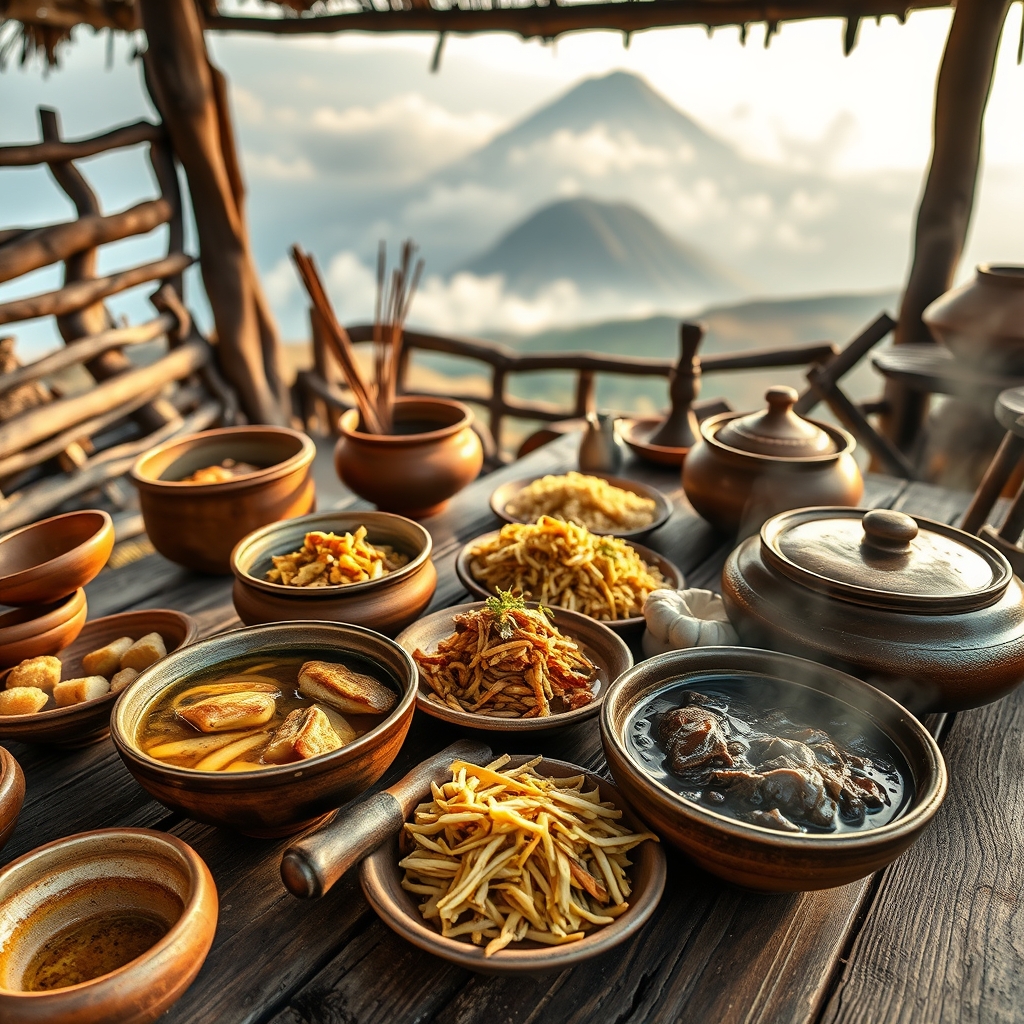
The first time I tasted Wedang Pokak Bromo, it was not just a drink—it was an awakening. The steam curled upward like the breath of the mountains themselves, carrying with it the scent of ginger, palm sugar, and something wild, something untamed. I held the glass between my palms, feeling the warmth seep into my fingers, my bones, as if the earth beneath me had decided to share its secrets in liquid form. That night, the air was thick with the scent of pine and damp earth, and the drink was not merely sweet or spicy but a balance of both, a harmony that mirrored the duality of the highlands: fierce yet tender, ancient yet ever-new.
The Language of Ingredients
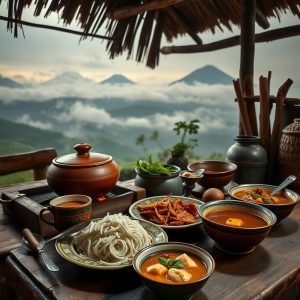
There is a quiet poetry in the way the people of East Java’s highlands speak through their food. Each dish is a verse, each ingredient a syllable in a language older than memory. Take Nasi Aron Tengger, for instance—a dish so simple in its construction yet so profound in its meaning. The rice, steamed to perfection, is not just a staple but a canvas, painted with the vibrant hues of turmeric, the earthy tones of fried shallots, and the subtle crunch of peanuts. It is a dish that tells the story of the land: the patience of the farmers who tend to the terraced fields, the wisdom of the cooks who know just how long to let the spices bloom in hot oil, and the reverence of those who sit down to eat, knowing they are partaking in something sacred.
And then there is Iga Pasir Bromo, a dish that carries the weight of the volcano in its name. The ribs, slow-cooked until the meat falls from the bone, are not just tender—they are a testament to time, to the slow alchemy of fire and patience. The sauce, rich with tamarind and a hint of chili, lingers on the tongue like the last notes of a song, leaving behind a warmth that spreads through the body like sunlight breaking through the morning mist. It is a dish that demands to be savored, not just eaten, for in every bite, there is a story of the land and the people who call it home.
The Whispers of the Mist
The highlands of East Java are a place where the mist is not just a weather phenomenon but a character in its own right. It rolls over the plateaus like a living thing, softening the edges of the world, turning the landscape into a watercolor painting. And just as the mist shapes the land, so too does it shape the flavors of the region. Sawut Kabut Bromo, a dish of grated cassava, is a perfect example. The cassava, grated and steamed, becomes a vessel for the flavors of the highlands—coconut milk, pandan leaves, and a touch of salt. It is a dish that tastes of the earth, of the mist that clings to the leaves in the early morning, of the quiet resilience of the people who have learned to thrive in this rugged terrain.
But the mist does not just influence the food—it also shapes the way it is eaten. There is a ritual to dining in the highlands, a slow, deliberate pace that mirrors the unhurried rhythm of life here. Meals are not rushed; they are savored, shared, and celebrated. The act of eating becomes a meditation, a way to connect with the land and with one another. Whether it is the crispy Keripik Kentang Sukapura, with its delicate balance of salt and spice, or the hearty Nasi Empok Malang, with its layers of rice, meat, and spices, each dish is an invitation to slow down, to breathe, to be present.
The Fire Beneath the Fog
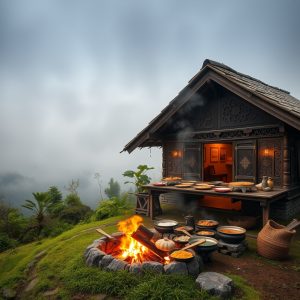
Beneath the cool mist and the gentle flavors of the highlands, there is a fire—a heat that comes not just from the chili peppers but from the very soul of the land. It is the fire of the volcano, the fire of the hearth, the fire of the people who have learned to harness its power in their cooking. Bledhus Jagung Tengger, a dish of grilled corn, is a perfect example. The corn, roasted over an open flame until the kernels are charred and sweet, is not just a snack—it is a celebration of the land’s bounty, a reminder of the fire that lies beneath the surface, waiting to be unleashed.
And then there is Bakso Bakar Malang, a dish that takes the humble meatball and elevates it to something extraordinary. The meatballs, grilled over hot coals until they are crispy on the outside and juicy on the inside, are served with a sauce that is equal parts sweet, spicy, and tangy. It is a dish that embodies the spirit of the highlands—bold, unapologetic, and full of life. The first time I tasted it, I was struck by the way the flavors danced on my tongue, each bite a revelation, a reminder that even in the quietest of places, there is a fire burning bright.
The Unseen Threads of Connection
Food is more than sustenance in the highlands of East Java—it is a thread that connects the past to the present, the land to the people, the individual to the community. Cwie Mie Malang, a dish of noodles served with a rich, savory broth, is a perfect example. The noodles, hand-pulled and cooked to perfection, are a testament to the skill of the cooks who have honed their craft over generations. The broth, simmered for hours with bones, spices, and herbs, is a labor of love, a dish that cannot be rushed. To eat it is to taste the history of the region, to feel the weight of the traditions that have shaped it.
And then there is Soto Kraksaan Probolinggo, a dish that carries the flavors of the coast in its broth. The turmeric, lemongrass, and galangal come together to create a symphony of flavors that is both comforting and complex. It is a dish that speaks of the connection between the highlands and the sea, of the way the land and the water are intertwined, each shaping the other in ways both seen and unseen.
In the highlands of East Java, every meal is a story, every dish a chapter in a larger narrative. The flavors are not just tasted—they are felt, experienced, lived. They are a reminder that food is not just something we eat but something that connects us to the land, to each other, and to ourselves. And perhaps that is the true magic of the highlands: not just the flavors themselves, but the way they make us feel—alive, connected, and utterly, completely human.