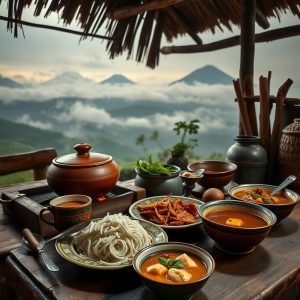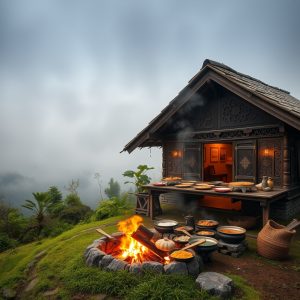
Where the Mist Meets the Mortar: A Meditation on East Java’s Highland Flavors
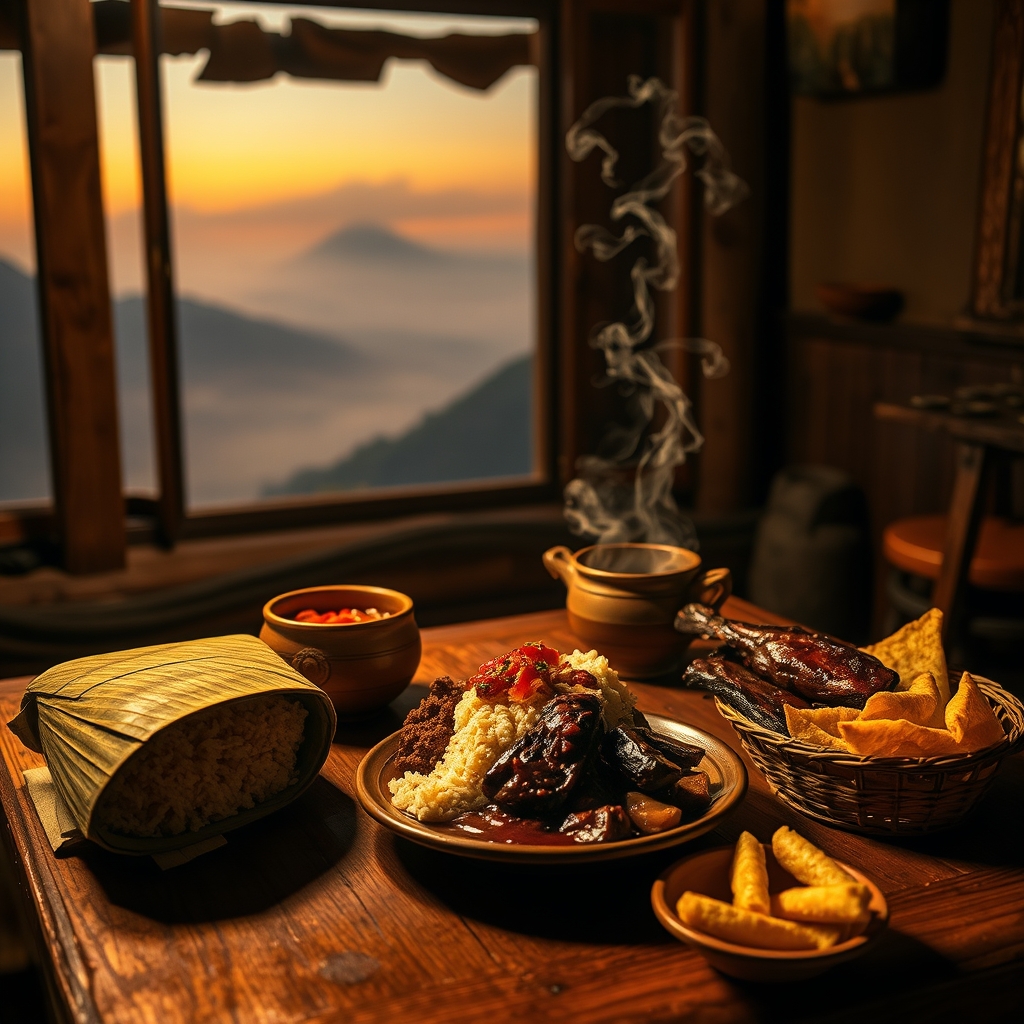
The first time I tasted Nasi Aron Tengger, I was not prepared for the way it would linger—not just on my tongue, but in the hollows of my memory. The rice, steamed in bamboo and kissed by the smoke of clove and cinnamon, carried the weight of something ancient, something that had been simmering long before I arrived. It was not merely a dish; it was a conversation between the earth and the hands that had shaped it, a dialogue whispered across generations of Tenggerese farmers who had learned to coax life from the volcanic soil. The mist that curled around my fingers as I lifted the banana leaf wrapper was the same mist that had settled over these highlands for centuries, carrying with it the scent of damp earth and the faint, smoky promise of hearth fires.
The Alchemy of Fire and Fog
There is a quiet magic in the way the people of East Java’s highlands transform the simplest ingredients into something transcendent. Take Wedang Pokak Bromo, for instance—a spiced ginger drink that arrives in a clay cup, its warmth seeping into your palms like a slow, deliberate embrace. The ginger is not just a root here; it is a remedy, a storyteller, a bridge between the chill of the mountain air and the fire in your belly. The first sip is a jolt, a sharp, citrusy awakening, but the aftertaste lingers like a half-remembered dream, sweet with palm sugar and fragrant with lemongrass. It is the kind of drink that makes you pause, that forces you to acknowledge the moment, the steam rising between you and the world like a veil being lifted.
And then there is Iga Pasir Bromo, the ribs that have been slow-cooked until the meat falls from the bone like a secret finally confessed. The name itself—pasir, meaning sand—hints at the volcanic origins of its flavor, the way the spices cling to the meat as if they, too, are grains of something sacred. The sauce is thick with tamarind and chili, a balance of heat and sour that mirrors the duality of the highlands themselves: harsh yet nurturing, unforgiving yet abundant. Eating it feels like an act of communion, as if each bite is a small offering to the spirits of the mountain.
The Humble and the Holy
Not all the dishes of these highlands are grand or elaborate. Some, like Sawut Kabut Bromo, are humble in their simplicity, yet no less profound. A porridge of corn and cassava, it is the kind of food that sustains rather than dazzles, the kind that is eaten not for pleasure but for survival. And yet, there is a quiet dignity in its unassuming nature, a reminder that sustenance is not always about indulgence but about endurance. The Tenggerese people know this better than most—they have carved a life out of the side of a volcano, after all. Sawut Kabut is their daily bread, their manna, a testament to the resilience of those who call these misty heights home.
Then there are the snacks, the small joys that punctuate the day like notes in a melody. Keripik Kentang Sukapura, thin slices of potato fried to a golden crisp, are the kind of treat that demands to be eaten slowly, savored like a whispered joke between friends. The potatoes are grown in the rich volcanic soil, their flavor deep and earthy, their texture a perfect crunch that gives way to a buttery softness. They are simple, unpretentious, and yet they carry within them the essence of the land itself. To eat them is to taste the highlands in their purest form.
The Language of Spice and Smoke
In Malang, the flavors take on a different character, one that is bolder, more assertive. Nasi Empok Malang is a dish that refuses to be ignored. The rice, cooked with coconut milk and pandan leaves, is fragrant and slightly sticky, a perfect canvas for the rich, spicy sambal that accompanies it. The empok—a type of fried tempeh—adds a nutty depth, its crisp edges giving way to a tender, almost creamy interior. Together, they create a symphony of textures and flavors, a dish that is at once comforting and exhilarating. It is the kind of food that makes you close your eyes and exhale, as if you’ve been holding your breath for far too long.
And then there is Bakso Bakar Malang, the grilled meatballs that have become a street food legend. Skewered and charred over an open flame, they are brushed with a sweet and savory sauce that caramelizes on the outside, creating a sticky, smoky crust. The first bite is a revelation—the meat is tender, almost juicy, while the exterior crackles with a satisfying crunch. It is a dish that embodies the spirit of Malang itself: vibrant, unapologetic, and full of life. To eat it is to understand why this city has captured the hearts of so many.
The Ritual of the Meal
Perhaps the most beautiful thing about the cuisine of East Java’s highlands is the way it turns the act of eating into a ritual. There is no rush here, no hurried bites or distracted chewing. Every meal is an opportunity to pause, to connect, to acknowledge the hands that prepared the food and the land that provided it. Cwie Mie Malang, with its springy noodles and rich, savory broth, is a dish that demands your full attention. The noodles are hand-pulled, the broth simmered for hours, the toppings arranged with care. To eat it is to participate in a tradition, to become part of a story that stretches back generations.
Even the simplest of drinks, like Angsle Hangat Bromo, carry this sense of ritual. A warm concoction of sticky rice balls, sweet potatoes, and coconut milk, it is the kind of drink that is sipped slowly, savored like a quiet moment in a busy day. The first spoonful is a comfort, the sweetness of the coconut milk mingling with the earthy flavor of the sweet potatoes. It is the taste of home, of warmth, of safety—a reminder that even in the cold, misty highlands, there is always a place to find solace.
The flavors of East Java’s highlands are not just about taste; they are about time. They are about the slow, steady rhythm of life in a place where the land is both provider and adversary, where every meal is a testament to the resilience of those who call these mountains home. To eat here is to taste the past, to feel the weight of history in every bite, and to carry a piece of it with you long after you’ve left. The mist may fade, the memories may blur, but the flavors remain, etched into your senses like the grooves of a well-worn path.