Whispers of the Highlands: A Culinary Pilgrimage Through the Misty Flavors of East Java
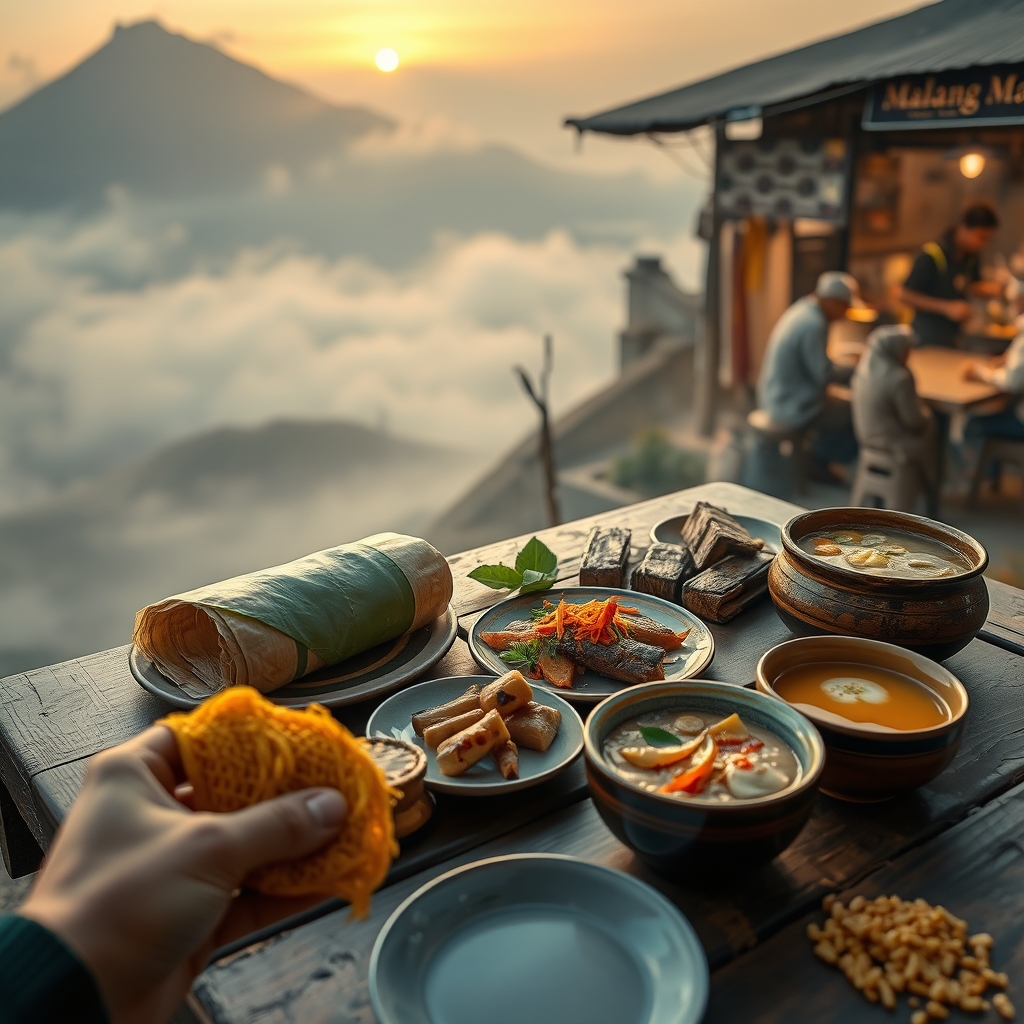
The first time I tasted Nasi Aron Tengger, the rain was falling in soft, silver threads over the slopes of Mount Bromo. The rice, steamed in bamboo and kissed by the smoke of clove-scented wood, arrived wrapped in banana leaves like a secret from the earth itself. There was something sacred in the way the grains clung together—each bite a quiet communion with the highlands, with the hands that had planted and harvested, with the mist that curled around the peaks like a shawl. Food, I realized then, is not merely sustenance; it is memory pressed into edible form.
The Alchemy of Smoke and Spice
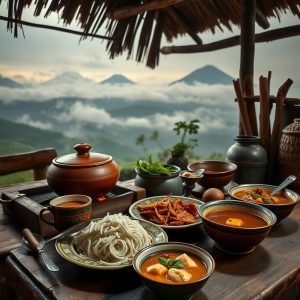
In the shadow of the volcano, where the air is thin and the light has a golden, diffused quality, the people of Tengger have perfected the art of slow cooking. Wedang Pokak Bromo, a spiced herbal drink, simmers for hours in clay pots, its warmth a balm against the chill of the high altitudes. The ginger, lemongrass, and pandan leaves release their essences into the water, creating a brew that tastes like liquid sunshine—sweet, earthy, and slightly smoky, as if the very spirit of the mountain has been distilled into a cup. I remember sipping it slowly, watching the steam rise in delicate spirals, feeling the heat seep into my bones and thaw the lingering cold of the dawn.
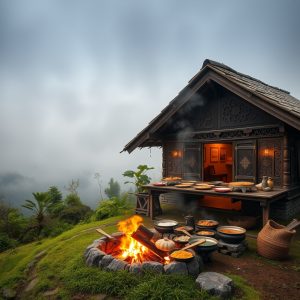
Then there was Iga Pasir Bromo, ribs slow-cooked in a pit of volcanic sand until the meat fell from the bone like silk. The sand, heated by the earth’s own fire, imparts a depth of flavor that no modern oven could replicate. The ribs arrive glistening, their surface caramelized, the sauce clinging to them like a lover’s embrace. Each bite is a revelation—smoky, sweet, and savory all at once, a testament to the patience and wisdom of those who understand that some things cannot be rushed.
The Humble and the Holy
Not all the treasures of these highlands are grand or elaborate. Some are humble, born of necessity and elevated by love. Sawut Kabut Bromo, a simple porridge made from corn and cassava, is one such dish. It is the food of farmers and herders, of those who rise before the sun to tend to their fields. Yet, in its simplicity, there is a purity that speaks to the soul. The corn, ground by hand, retains a coarse texture that is both comforting and grounding. The cassava, sweet and starchy, melds with the corn to create a dish that is greater than the sum of its parts. It is food that nourishes not just the body, but the spirit—a reminder that sustenance need not be extravagant to be profound.
And then there are the snacks, the small joys that punctuate the day. Keripik Kentang Sukapura, thin slices of potato fried to a perfect crisp, are a staple in every household. The potatoes, grown in the fertile volcanic soil, have a natural sweetness that is amplified by the frying process. Each chip is a delicate balance of crunch and flavor, a testament to the alchemy of fire and oil. I would often find myself reaching for another handful, unable to resist their siren call, even as the crumbs gathered on my lap like tiny, golden confetti.
The Lowlands’ Lullabies
Descending from the highlands, the air grows warmer, the landscape shifts, and the flavors change. In Malang, the city hums with a different kind of energy, one that is vibrant and bustling. Here, Nasi Empok Malang reigns supreme—a dish of fragrant rice cooked with coconut milk and served with an array of accompaniments. The rice, fluffy and aromatic, is a canvas for the bold flavors that surround it: spicy sambal, crispy fried shallots, tender slices of chicken, and a fried egg with a runny yolk that begs to be broken. It is a dish that demands to be eaten with the hands, each bite a symphony of textures and tastes.
And then there is Cwie Mie Malang, a noodle dish that is as much a part of the city’s identity as its colonial architecture. The noodles, chewy and springy, are tossed in a rich, savory sauce made from pork or chicken broth, soy sauce, and a hint of sweetness. Topped with slices of tender meat, wontons, and a sprinkle of fried shallots, it is a dish that is both comforting and complex. I remember eating it at a small warung, the steam rising from the bowl in fragrant clouds, the sounds of the city fading into the background as I lost myself in the flavors.
The Sweet and the Spicy
No journey through East Java would be complete without indulging in its sweets and spicy delights. Bledhus Jagung Tengger, a traditional corn cake, is a perfect example of the region’s love for simple, wholesome ingredients. The corn, freshly harvested, is ground and mixed with coconut milk and a touch of sugar, then steamed until it achieves a delicate, custard-like texture. It is sweet, but not cloyingly so, with a subtle nuttiness from the corn that lingers on the palate. Paired with a cup of Kopi Asli Amstirdam, a robust local coffee, it is the perfect way to start the day—or to end it.
For those who crave heat, Sego Sambel Tempong is a revelation. The rice, served with an array of side dishes, is accompanied by a sambal so fiery it borders on the sublime. The chili peppers, pounded with garlic, shrimp paste, and a touch of sugar, create a sauce that is both brutal and beautiful. It is not for the faint of heart, but for those who dare, it is an experience that lingers long after the meal is over. The first time I tried it, my eyes watered, my nose ran, and my mouth burned—but I could not stop eating. There was something exhilarating about the heat, something that made me feel alive in a way I had never experienced before.
The Ritual of Return
As my journey drew to a close, I found myself back in the highlands, standing once more on the slopes of Mount Bromo. The mist had rolled in, obscuring the peaks, and the air was thick with the scent of damp earth and woodsmoke. I thought of all the meals I had eaten, all the flavors I had experienced, and I realized that this journey had been about more than just food. It had been a pilgrimage—a search for connection, for meaning, for the stories that are woven into every dish.
Food is never just food. It is history, culture, love, and memory. It is the hands that prepare it, the land that nourishes it, the people who share it. In East Java, where the highlands meet the lowlands and the mist kisses the earth, the flavors are as rich and varied as the landscape itself. To taste them is to taste the soul of the place, to feel its heartbeat in every bite. And perhaps, in some small way, to carry a piece of it with you, long after the journey is over.