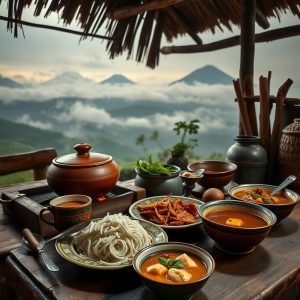
Echoes of the Volcano: A Journey Through the Soulful Flavors of East Java’s Highlands
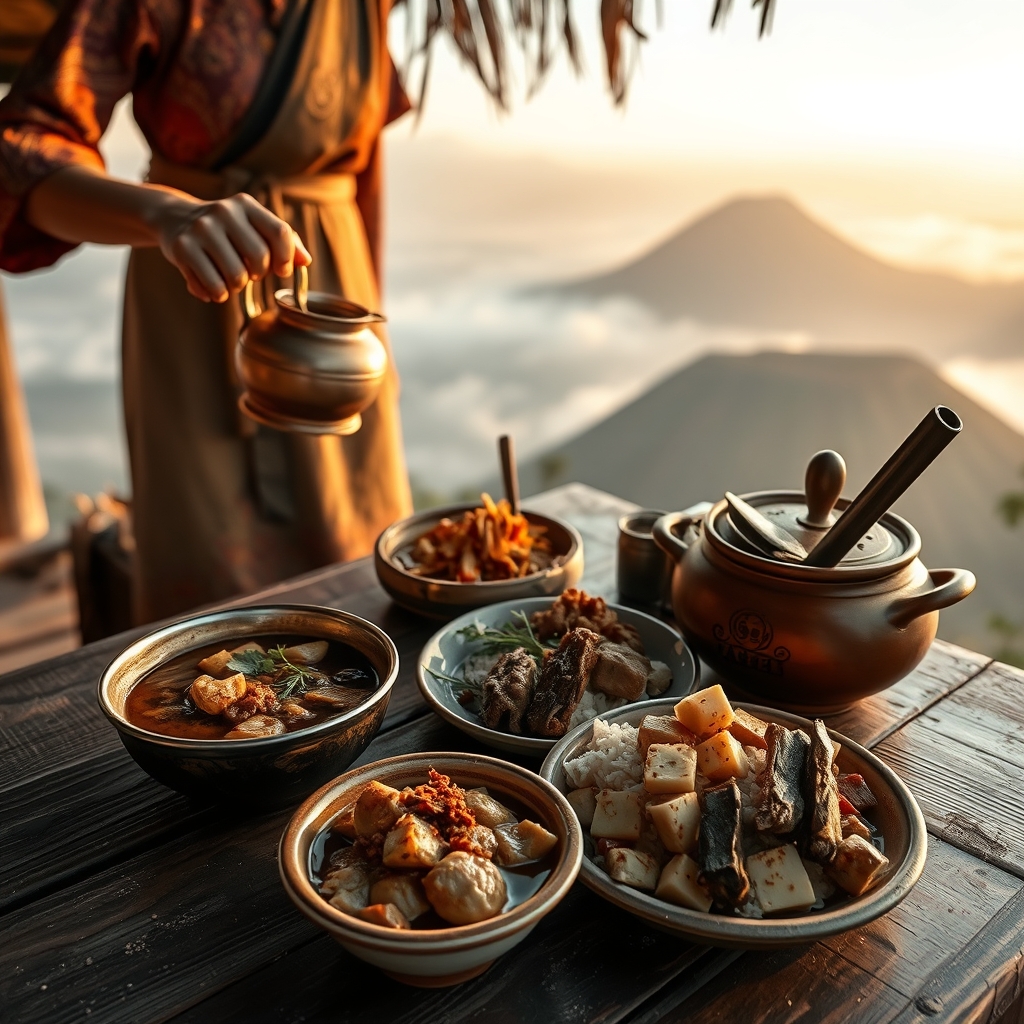
The first time I stood at the edge of Mount Bromo, the world seemed to pause. The air was thin, laced with the scent of sulfur and damp earth, and the mist curled around my ankles like a living thing. Below, the Tengger Caldera stretched out in a vast, otherworldly expanse, its ashen plains whispering stories of ancient eruptions and the people who had learned to thrive in their shadow. But it wasn’t just the landscape that captivated me—it was the food. The flavors of these highlands are not merely sustenance; they are a language, a way of speaking to the land, to history, to the very soul of East Java.
The Warm Embrace of Wedang Pokak Bromo
On those cold mornings when the fog clings to the slopes like a shroud, there is nothing quite like a steaming cup of Wedang Pokak Bromo. The name itself is a melody—wedang, meaning drink, and pokak, a local herb with a fragrance that is both earthy and sweet. The first sip is a revelation: ginger’s fiery warmth dances with the subtle bitterness of the pokak leaves, while palm sugar lends a caramel depth that lingers on the tongue. It is the kind of drink that doesn’t just warm the body; it cradles the spirit, a reminder that even in the harshest climates, there is comfort to be found.
I remember sitting on a wooden bench outside a small warung, watching the sunrise paint the sky in hues of gold and pink. The vendor, an elderly woman with hands roughened by years of labor, handed me the cup with a smile that spoke of generations of shared warmth. In that moment, I understood why this drink is more than a beverage—it is a ritual, a daily communion with the land and its people.
The Earthy Whispers of Nasi Aron Tengger
If Wedang Pokak is the voice of the highlands, then Nasi Aron Tengger is its heartbeat. This dish, a humble yet profound offering, is a symphony of textures and flavors. Fragrant rice, cooked until each grain is distinct yet tender, is paired with a medley of vegetables—carrots, cabbage, and long beans—sautéed with garlic and shallots until they sing. The real magic, though, lies in the tempe and tofu, fried to a perfect crisp and nestled atop the rice like golden jewels.
What makes Nasi Aron special is its simplicity. There are no elaborate sauces or complex techniques, just the honest, unadorned flavors of the earth. It is the kind of dish that tells you everything you need to know about the Tenggerese people: resilient, resourceful, and deeply connected to the land. As I ate, I could almost taste the volcanic soil in the vegetables, the crisp mountain air in the rice. It was as if the dish itself was a love letter to the highlands.
The Smoky Allure of Iga Pasir Bromo
No journey through the flavors of Bromo would be complete without Iga Pasir, a dish that embodies the rugged spirit of the region. Literally translating to “sand ribs,” this dish is a testament to the ingenuity of the Tenggerese. Beef ribs are marinated in a blend of spices—turmeric, coriander, garlic, and a touch of chili—before being slow-cooked in a pit of hot volcanic sand. The result is meat so tender it falls off the bone, infused with a smoky, earthy flavor that is unlike anything else.
I watched as a local chef, his face weathered by the sun and wind, dug a hole in the black sand. He placed the marinated ribs inside, covering them with more sand, and let the heat of the earth do its work. As I waited, the aroma of spices and slow-cooked meat filled the air, mingling with the scent of the volcano. When I finally took a bite, it was like tasting the very essence of Bromo—wild, untamed, and deeply satisfying.
The Crisp Delights of Sawut Kabut and Keripik Kentang Sukapura
Not all the treasures of the highlands are savory. Sometimes, the simplest pleasures are the most memorable. Sawut Kabut Bromo, a dish made from grated cassava, is one such delight. The cassava is mixed with grated coconut, sugar, and a pinch of salt, then steamed until it forms a soft, slightly sticky cake. The texture is a revelation—chewy yet light, with a subtle sweetness that is utterly addictive. It is the kind of snack that demands to be eaten slowly, savored with a cup of strong kopi asli (local coffee) as the mist rolls over the hills.
And then there are the Keripik Kentang Sukapura, thin slices of potato fried to a perfect crisp and dusted with a blend of spices. These chips are not the mass-produced kind you find in supermarkets; they are a labor of love, each batch made by hand and seasoned with a secret mix of chili, garlic, and salt. The first crunch is like a burst of sunshine, a reminder that even in the cold, misty highlands, there is joy to be found in the simplest of things.
The Comfort of Angsle Hangat Bromo
As the day gives way to night and the temperature drops, the people of Bromo turn to Angsle, a warm, sweet drink that is as comforting as a hug. Made with glutinous rice balls, sweet potatoes, peanuts, and coconut milk, it is a dish that feels like home. The first time I tried it, I was struck by how perfectly it balanced sweetness and warmth. The chewy rice balls, the creamy coconut milk, the crunch of peanuts—it was a symphony of textures, a reminder that food is not just about taste, but about the memories and emotions it evokes.
I sat in a small café, the steam from my bowl of Angsle curling into the cold air. Around me, families laughed and chatted, their voices blending with the soft hum of the wind. In that moment, I realized that the true magic of the highlands lies not just in its landscapes, but in its people and the traditions they hold dear. The food is merely a vessel, a way to carry the stories, the struggles, and the triumphs of those who call this place home.
Every bite, every sip, is a step deeper into the heart of East Java. The flavors are not just flavors—they are echoes of the volcano, whispers of the mist, and the warm embrace of a land that has learned to thrive in the face of adversity. To taste them is to understand that food is more than sustenance; it is a journey, a story, a piece of the soul.