The Unwritten Recipes of the Tengger: Where Fire, Fog, and Flavor Weave the Highlands into Memory

The first time I tasted Wedang Pokak Bromo, the steam curled around my face like the breath of the mountain itself. It was not just a drink—it was a slow unraveling, a warmth that seeped into the bones long after the last sip. The ginger, sharp and bright, cut through the cold like a knife through mist, while the palm sugar whispered of earth and time. I held the glass between my palms, watching the way the light caught the golden liquid, and for a moment, I understood why the Tengger people call this place home. It is not just the land that holds them; it is the way the land tastes.
The Language of Smoke and Spice
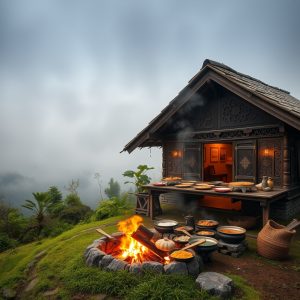
There is a quiet alchemy in the way the highlands of East Java cook. The air here is thinner, crisper, laced with the scent of woodsmoke and damp earth. It clings to the skin, seeps into the clothes, lingers in the hair long after the fire has died down. The dishes born from this place are not just food; they are conversations between the elements. Iga Pasir Bromo, for instance, is not merely grilled ribs. It is the slow dance of meat and ember, the way the fat renders into the coals, sending up plumes of smoke that carry the scent of the volcano. The Tenggerese do not rush this. They let the fire do its work, let the smoke infuse the meat with the memory of the mountain’s breath.
And then there is Sawut Kabut Bromo, a dish so humble it might go unnoticed by those who do not know how to look. Cornmeal, cassava, and sweet potato, steamed until soft, then mixed with grated coconut and a whisper of salt. It is the kind of food that fills the belly without pretense, the kind that speaks of long winters and short harvests. The first time I ate it, I was struck by how something so simple could feel so profound. It was as if the earth itself had reached up through the plate and pressed its palm to my chest, a reminder of what it means to be nourished.
The Whisper of the Ancestors in Every Bite
Some flavors are not just tasted; they are remembered. Nasi Aron Tengger is one of them. The rice, cooked with coconut milk and wrapped in banana leaves, carries the scent of the forest, of damp soil and green things growing. It is said that the Tenggerese have prepared this dish for centuries, a offering to the gods of the mountain, a prayer for protection and abundance. When I ate it, I could almost hear the voices of those who had come before, their hands shaping the leaves, their breath warming the steam. There is a sacredness to it, a quiet reverence that lingers in the mouth long after the last grain has been swallowed.
And then there is Bledhus Jagung Tengger, the roasted corn that is more than just a snack. It is a ritual. The corn is charred over open flames until the kernels pop and blacken, their sweetness deepening with each lick of fire. The Tenggerese eat it with their fingers, the heat of the cob burning against their skin, the taste of smoke and sugar mingling on their tongues. It is a reminder that food is not just sustenance; it is connection. To the earth, to the fire, to the hands that prepared it, to the people who share it.
The Silence Between the Flavors
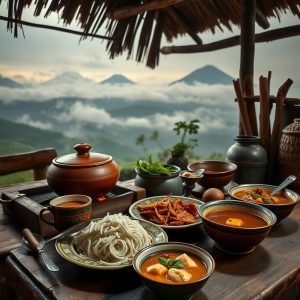
In the highlands, the meals are not rushed. There is no clatter of plates, no hurried chewing. There is only the sound of the wind through the pines, the crackle of the fire, the occasional murmur of conversation. The food here is not just eaten; it is savored, as if each bite is a moment to be held, examined, cherished. Keripik Kentang Sukapura, thin slices of potato fried to a delicate crisp, dissolve on the tongue like the first snow of the season. Nasi Empok Malang, fragrant rice pressed into cakes and grilled until the edges are golden, carries the weight of tradition in every bite. These are not dishes to be devoured; they are dishes to be meditated upon.
Even the drinks here are an exercise in patience. Angsle Wedang Ronde, a warm concoction of sweet potatoes, peanuts, and sticky rice balls in ginger syrup, is not just a beverage. It is a hug in a bowl, a slow unfurling of warmth that begins in the stomach and spreads outward, thawing fingers and toes, easing the mind into stillness. The Tenggerese do not drink it in haste. They sip it slowly, letting the heat seep into their bones, letting the flavors unfold like the petals of a flower at dawn.
The Fire That Never Dies
Perhaps that is the true magic of the highlands. It is not just the food, but the way it is eaten. There is a fire here that never dies, not in the hearths, not in the hearts of the people. It is in the way they gather around the flames, in the way they share their meals, in the way they look at the mountain as if it is a living thing, a guardian, a friend. Bakso Bakar Malang, skewers of meatballs grilled over charcoal, are not just a street food. They are a testament to the resilience of the people, to their ability to find joy in the simplest things. The first bite is always the best—the crispness of the outer layer, the juiciness within, the smoky char that clings to the meat like a memory.
And then there is Cwie Mie Malang, a dish that carries the soul of the city in its noodles. The broth, rich and fragrant, is a symphony of spices, a melody of flavors that sings of home. The noodles, chewy and satisfying, are a reminder that even in the cold, there is warmth to be found. The Tenggerese know this. They have always known this. It is why they cook with fire, why they eat with their hands, why they share their meals with strangers. Because food is not just food. It is love, it is memory, it is the thread that binds us to the earth and to each other.
The last time I left the highlands, I carried the taste of Soto Kraksaan Probolinggo with me. The broth, golden and fragrant, had warmed me from the inside out, its spices lingering on my tongue like a promise. I thought of the hands that had stirred the pot, the fire that had simmered the broth, the earth that had grown the ingredients. I thought of the way the mist had curled around the mountain that morning, the way the sun had painted the sky in hues of pink and gold. And I knew, with a certainty that settled deep in my bones, that I would return. Not just for the food, but for the way it made me feel. Alive. Connected. Home.