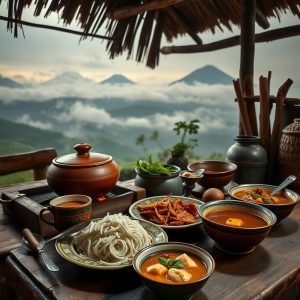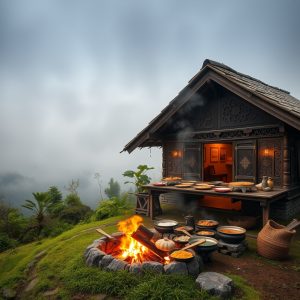
The Murmur of Maize and the Sigh of the Volcano: A Highland Reverie in East Java’s Culinary Whispers

The highlands of East Java cradle secrets in their folds—stories spun from the breath of volcanoes and the quiet rustle of maize fields swaying under the weight of dawn. Here, where the air is thin and the mist clings like a lover’s last embrace, the land speaks in flavors that linger on the tongue long after the meal is done. It is a language of smoke and spice, of ember-kissed grains and the slow simmer of time, where every dish is a verse in an ancient, unspoken poem.
The Whisper of the Wind Through the Maize
Stand at the edge of Penanjakan at first light, and you will understand why the people of Tengger weave maize into their very souls. The Jagung Bakar Penanjakan is not merely roasted corn; it is a communion with the earth, its kernels charred to a smoky sweetness that carries the scent of sacred fires. The smoke curls upward, mingling with the mist, as if the mountain itself is exhaling. There is a quiet reverence in the way the vendors tend their grills, their hands moving with the patience of those who know the land’s rhythms by heart. Each bite is a reminder that food here is not just sustenance—it is a conversation with the elements.
And then there is Bledhus Jagung Tengger, a dish so humble yet so profound it feels like a secret passed down through generations. The corn is ground into a coarse flour, mixed with coconut milk and a whisper of salt, then steamed until it swells into something tender and fragrant. It is eaten with fingers, the grains clinging to the skin like memories, each mouthful a taste of the highland’s quiet resilience. The Tenggerese do not rush their meals; they savor them, as if every bite is a prayer to the gods who watch over the plateau.
The Warmth of a Bowl Held Close
In the chill of the highlands, warmth is not just a sensation—it is a necessity, a lifeline. Wedang Pokak Bromo arrives in a ceramic bowl, its surface shimmering with the promise of comfort. The drink is a symphony of ginger, palm sugar, and the faintest hint of citrus, its steam rising like the breath of the mountain itself. It is the kind of warmth that seeps into your bones, that makes you forget, if only for a moment, the cold bite of the wind outside. The Tenggerese say it wards off the mountain’s chill, but I think it does something more—it softens the edges of the world, turning the harshness of the highlands into something almost tender.
And then there is Angsle Hangat Bromo, a drink that feels like a hug from an old friend. Sweet, sticky, and brimming with glutinous rice balls, sweet potatoes, and peanuts, it is the kind of dish that demands to be shared. The first sip is a revelation—the warmth spreads through you like liquid sunshine, and for a moment, the world feels smaller, kinder. It is the taste of home, of hearths crackling in the dark, of laughter echoing through the mist. In a place where the air is thin and the nights are long, such warmth is not just welcome—it is sacred.
The Silence of the Soil, the Song of the Spice
To eat Sawut Kabut Bromo is to taste the very essence of the highlands. The dish is a medley of corn, cassava, and sweet potatoes, slow-cooked until the flavors meld into something earthy and profound. It is served with a sambal so fiery it feels like a challenge, a dare to taste the soul of the mountain. The first bite is a revelation—the sweetness of the vegetables, the heat of the chili, the smokiness of the spices all colliding in a dance that feels almost sacred. There is no rush here, no need to fill the silence with words. The flavors speak for themselves, a language older than time.
And then there is Sego Sambel Tempong
, a dish that carries the weight of the land in every grain of rice. The sambal is not just spicy—it is a force of nature, a fiery red paste that burns with the intensity of the sun. Yet beneath the heat lies a depth of flavor, a complexity that can only come from the soil of East Java. The rice is plain, unassuming, the perfect canvas for the sambal’s boldness. Together, they are a reminder that the simplest dishes often hold the deepest truths.
The Echo of the Hearth in Every Bite
In Malang, the Bakso Bakar Malang sizzles on the grill, its meatballs charred to perfection, their smoky aroma drifting through the night air. It is a dish that feels like a celebration, a feast for the senses. The first bite is a revelation—the juiciness of the meat, the crispness of the char, the sweetness of the sauce all coming together in a symphony of flavor. It is the kind of dish that brings people together, that turns strangers into friends over a shared love of good food.
And then there is Cwie Mie Malang, a bowl of noodles so rich in flavor it feels like a hug from the city itself. The noodles are chewy, the broth is deep and savory, and the toppings—slices of pork, wontons, and a sprinkle of fried shallots—are a testament to the city’s culinary creativity. It is the kind of dish that makes you slow down, that reminds you to savor every bite, every moment.
The Unseen Threads That Bind
Perhaps the most beautiful thing about East Java’s highland flavors is the way they connect us to something greater than ourselves. A bowl of Rawon Nguling Pasuruan, with its deep, earthy broth and tender beef, is not just a meal—it is a link to the past, a taste of the generations who have come before. The dark color of the broth, derived from the keluak nut, is a reminder of the land’s richness, of the way the soil gives and gives, asking for nothing in return.
And then there is Soto Kraksaan Probolinggo, a dish so fragrant it feels like a love letter to the senses. The broth is a golden elixir, infused with lemongrass, turmeric, and galangal, its aroma so intoxicating it feels like a spell. The chicken is tender, falling apart at the touch of a fork, and the rice is the perfect companion, soaking up the flavors like a sponge. It is the kind of dish that makes you close your eyes and sigh, that makes you feel, if only for a moment, that all is right with the world.
The highlands of East Java do not shout their stories—they whisper them, in the rustle of maize fields and the crackle of hearth fires, in the steam rising from a bowl of Wedang Ronde and the smoky aroma of Jagung Bakar Penanjakan. To taste these dishes is to listen, to lean in close and let the flavors tell their tales. And if you listen long enough, you might just hear the land itself, murmuring its secrets in the language of smoke and spice.