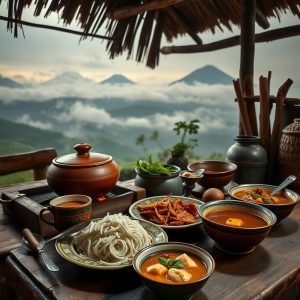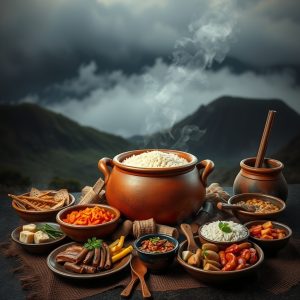
The Unseen Embrace: How East Java’s Highland Flavors Hold the Silence of the Ancients
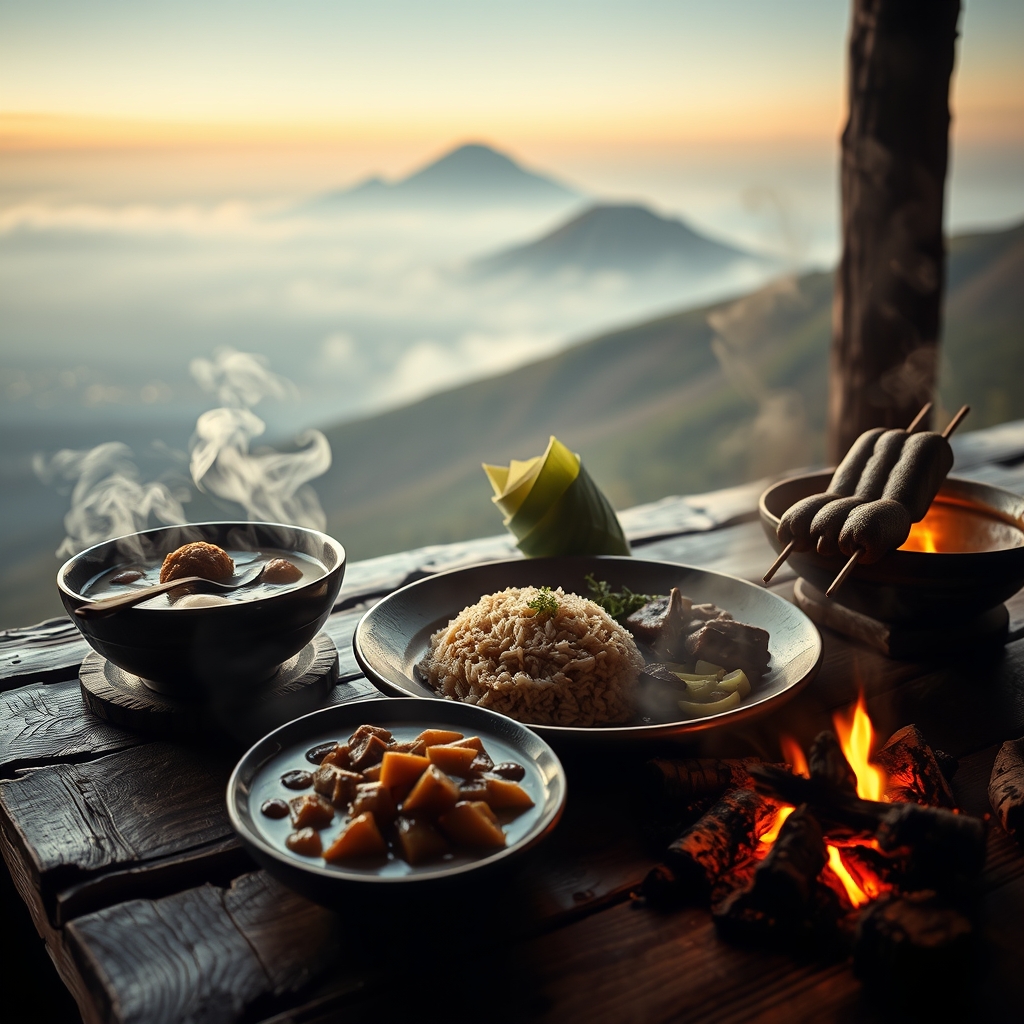
The first time I tasted Wedang Pokak Bromo, it was not just the ginger’s warmth that curled into my bones, nor the sweetness of palm sugar that lingered like a half-remembered dream. It was the silence that came after—the way the steam rose in slow, deliberate spirals, as if carrying whispers from the earth itself. The highlands of East Java do not shout their flavors; they murmur them, like secrets passed between the mist and the mortar, between the hands of those who have learned to listen.
The Alchemy of Stillness
There is a quiet in the Tengger Caldera that feels almost sacred, a hush so deep it hums. It is here, in the thin, cool air, that dishes like Nasi Aron Tengger are born—not from haste, but from patience. The rice, steamed in bamboo, absorbs the scent of the forest, the damp earth, the faint smokiness of distant fires. It is eaten not with urgency, but with reverence, each bite a meditation on the land’s generosity. The highlands do not demand attention; they earn it, grain by grain, spice by spice.
And then there is Iga Pasir Bromo, the ribs slow-cooked in the volcanic sands until the meat falls from the bone like a sigh. The process is ancient, almost ceremonial. The heat of the earth does the work, while the cook waits, watches, listens. There is no rushing the land. The flavors are not forced; they are coaxed, like a story drawn from memory. When you take that first bite, it is not just the tenderness of the meat you taste, but the weight of time—the hours spent in the embrace of the sands, the quiet understanding that some things cannot be hurried.
The Language of Smoke and Steam
In Malang, the air is thick with the scent of Bakso Bakar, the skewers of meatballs grilled over open flames until their edges crisp like autumn leaves. The smoke carries more than aroma; it carries history. The vendors who tend the coals are not just selling food; they are keeping alive a language of fire and flesh, a dialect of the streets that has been spoken for generations. To eat Bakso Bakar is to participate in a conversation that began long before you arrived and will continue long after you leave.
And then there is Cwie Mie Malang, the noodles bathed in a broth so rich it feels like liquid gold. The dish is a paradox—simple in its ingredients, yet profound in its depth. The noodles, chewy and yielding, are a testament to the hands that kneaded them, the water that boiled them, the broth that cradled them. Each slurp is a reminder that flavor is not just about taste; it is about connection. The bowl before you is not just food; it is a bridge between the past and the present, between the cook and the eater, between the earth and the sky.
The Whisper of Forgotten Ingredients
Some flavors are so quiet they risk being forgotten. Sawut Kabut Bromo, the corn porridge of the highlands, is one such dish. It is humble, unassuming, the kind of food that does not announce itself but waits to be discovered. The corn, ground by hand, carries the texture of the earth, the grit of the millstone, the sweat of the farmer. It is eaten not for spectacle, but for sustenance—for the way it fills the belly and warms the soul, like a whispered promise on a cold morning.
And then there is Bledhus Jagung Tengger, the grilled corn that tastes of smoke and sunlight. It is a dish of simplicity, yet its flavor is anything but simple. The corn, charred over open flames, is a study in contrasts—the sweetness of the kernels, the bitterness of the smoke, the salt of the sea air that drifts up from the coast. It is a reminder that the most profound flavors are often the ones that do not try too hard, that do not demand to be noticed but simply are.
The Silence Between the Bites
There is a moment, just after the last bite of Rawon Nguling Pasuruan, when the richness of the black nut broth lingers on the tongue, and the world feels still. The dish is a masterpiece of balance—earthy, spicy, slightly sweet, with the tender beef melting like shadows at dusk. It is a dish that does not just feed the body; it feeds the soul, offering a taste of something deeper, something almost spiritual. In that silence, you understand that the highlands do not just nourish; they hold. They hold the stories of those who came before, the hands that prepared the meal, the land that provided the ingredients.
Perhaps that is why Angsle Hangat Bromo is more than just a drink. The warm, sweet concoction of coconut milk, black glutinous rice, and peanuts is a hug in a bowl, a reminder that comfort can be found in the simplest of things. It is the kind of dish that does not ask for anything in return; it simply gives, like the land itself, like the hands that stir the pot, like the steam that rises into the cold mountain air.
The flavors of East Java’s highlands are not just meant to be eaten; they are meant to be felt. They are the quiet hum of the earth, the slow breath of the volcano, the hush of the mist as it rolls over the plateaus. They are the taste of time, of patience, of the unseen hands that have shaped them. And when you take that final sip of Kopi Asli Amstirdam, the bitterness of the coffee mingling with the sweetness of memory, you realize that the true flavor of the highlands is not in the food itself, but in the silence that follows—the silence that holds everything together.