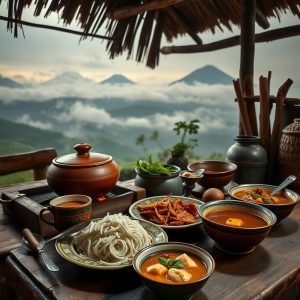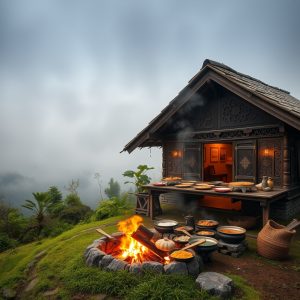
The Language of Steam and Starlight: Tasting the Highlands of East Java in Every Bite
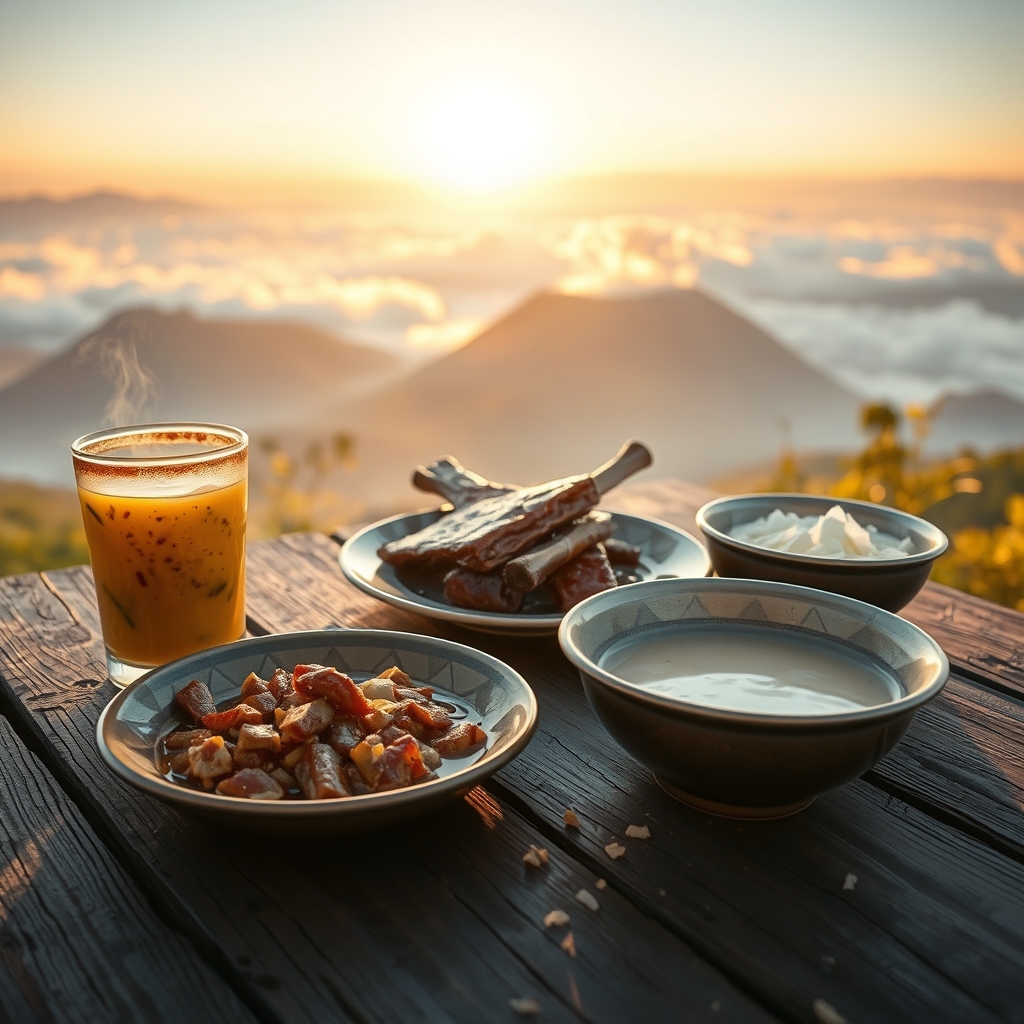
The first time I stood at the edge of Penanjakan, the world below me was a canvas of silver mist and ember glow. The air carried the scent of charred corn and something deeper—woodsmoke, damp earth, the faint metallic tang of volcanic soil. It was not just the view that took my breath away, but the quiet promise of warmth waiting in the folds of the highlands, where food is not merely eaten but felt, where every dish is a conversation between fire and fog, between memory and the present moment.
The Whisper of Wedang Pokak in the Cold Dawn
Before the sun claws its way above the horizon, the highland villages stir with the sound of boiling water and clinking glasses. Wedang Pokak Bromo is not just a drink; it is a ritual, a slow unraveling of the night’s chill. The ginger, turmeric, and lemongrass steep in simmering water, their golden hues bleeding into the liquid like watercolor on wet paper. The first sip is a jolt—spicy, sweet, earthy—like swallowing a piece of the mountain itself. It lingers on the tongue, a fleeting warmth that reminds you that even in the coldest hours, there is always something to hold onto.
I remember sitting on a wooden bench outside a warung, wrapped in a thin shawl, watching the steam rise from my glass in delicate curls. An old man beside me sipped his in silence, his breath visible in the frigid air. There was no need for words. The drink spoke for us, a shared understanding that some comforts are too deep for language.
The Slow Dance of Iga Pasir and Sawut Kabut
If Wedang Pokak is the prelude, then Iga Pasir Bromo is the main act—a dish that demands patience, reverence. The ribs, marinated in a paste of shallots, garlic, and candlenuts, are slow-cooked in the earth’s own oven, buried beneath layers of volcanic sand. The meat falls from the bone like a secret being revealed, tender and smoky, infused with the primal scent of the land. It is not just food; it is an excavation, a taste of something ancient and untamed.
And then there is Sawut Kabut, the porridge of the mist. Made from corn, cassava, and sweet potatoes, it is humble yet profound, a dish born from necessity but elevated by the highland’s alchemy. The grains soften into a creamy consistency, absorbing the flavors of coconut milk and pandan leaves. It is eaten with fingers, the warmth seeping into your palms, a reminder that sustenance is not just about filling the stomach but nourishing the soul.
The Crisp Poetry of Keripik Kentang Sukapura
In the quiet moments between meals, when the mist rolls in thicker and the world feels suspended in time, there is the crunch of Keripik Kentang Sukapura. Thin slices of potato, fried to a golden crisp, their edges curling like the pages of an old book. They are simple, unassuming, yet impossible to resist. Each bite is a burst of salt and oil, a fleeting pleasure that dissolves too quickly, leaving you reaching for another. It is the kind of snack that doesn’t just satisfy hunger but staves off loneliness, a small comfort in the vastness of the highlands.
The Night’s Embrace: Bakso Bakar and the Stars
When night falls over Malang, the streets come alive with the sizzle of Bakso Bakar. Skewers of meatballs, brushed with sweet soy sauce and grilled over open flames, their edges charring into a smoky crust. The aroma is intoxicating, a mix of caramelized sugar and burning wood, drawing you in like a moth to a flame. It is eaten standing up, under the glow of flickering lanterns, the heat of the skewers warming your hands as much as your belly.
I once shared a plate with a stranger, a traveler like me, both of us too tired to speak but too hungry to care. The meatballs were juicy, the sauce clinging to them like a lover’s embrace. We ate in silence, the stars above us bright and unblinking, as if they too were savoring the moment.
The Sweet Sorrow of Bledhus Jagung Tengger
There is a bittersweetness to Bledhus Jagung, the sticky rice cake of the Tengger people. Steamed in banana leaves, it is sweet but not cloying, the coconut milk and palm sugar blending into a harmony that feels like nostalgia. It is often eaten in the late afternoon, when the light slants golden and the air hums with the sound of cicadas. Each bite is a reminder of time passing, of moments slipping through your fingers like grains of sand.
The Last Sip: Angsle and the Art of Letting Go
No journey through the highlands is complete without Angsle, the warm elixir of glutinous rice balls, peanuts, and coconut milk. It is a drink of contradictions—sweet yet savory, comforting yet invigorating. The first time I tasted it, I was shivering, my fingers numb from the cold. The warmth spread through me like a slow fire, melting the stiffness in my bones. It was not just a drink; it was a surrender, an acceptance that some things—like the highlands, like memory—are too vast to hold onto, but beautiful enough to savor while they last.
As I sit here now, far from the mist and the mountains, I can still taste the smoky ribs, the crisp potatoes, the sweet rice cakes. The highlands of East Java do not just feed the body; they feed the soul, leaving behind a quiet longing, a hunger that no meal can satisfy. It is the kind of hunger that lingers, not for food, but for the feeling of being alive, of standing at the edge of the world and knowing, if only for a moment, that you are exactly where you are meant to be.