Bromo’s Accommodation Tightrope: Balancing Aesthetic Ambition and the Harsh Realities of Volcanic Terrain

The raw, untamed beauty of Mount Bromo is a siren call to travelers seeking both adventure and solace. Yet, the accommodations that dot its periphery often walk a precarious tightrope—one that stretches between architectural ambition and the unyielding realities of volcanic terrain. The best among them do not merely provide shelter; they curate an experience that harmonizes with the landscape, while the rest risk becoming mere footnotes in a traveler’s itinerary, overshadowed by the very environment they seek to complement.
The Illusion of Seamless Integration
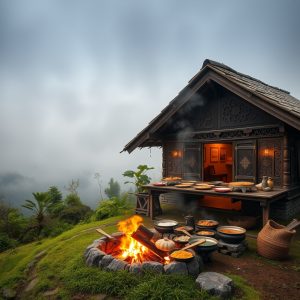
Take Jiwa Jawa Resort Bromo and Plataran Bromo Resort, for instance. Both establishments have mastered the art of blending into the rugged topography, their structures designed to appear as though they’ve emerged organically from the earth. Jiwa Jawa’s low-slung, Javanese-inspired villas, with their thatched roofs and wooden beams, evoke a sense of timelessness, while Plataran’s use of natural stone and expansive glass facades creates a dialogue between interior comfort and the stark, otherworldly beauty outside. These resorts succeed because they do not attempt to dominate the landscape but instead position themselves as humble observers, offering guests a front-row seat to Bromo’s grandeur without stealing the show.
Yet, this illusion of seamless integration is not without its challenges. The volcanic soil, while fertile, is also unstable, demanding constant maintenance and reinforcement. The resorts’ aesthetic choices—while visually striking—often come at the cost of practicality. For example, the extensive use of glass, while providing breathtaking views, also necessitates rigorous cleaning regimens to combat the ever-present volcanic dust. The line between ambition and feasibility is thin, and not all accommodations manage to straddle it as gracefully as Jiwa Jawa or Plataran.
The Pitfalls of Over-Ambition
Contrast this with establishments like Bromo Terrace Hotel and Lava View Lodge, where the desire to capitalize on Bromo’s dramatic scenery has led to architectural overreach. Bromo Terrace Hotel’s multi-level design, with its cascading balconies, is undeniably photogenic, but it often feels more like a stage set than a functional retreat. The lodge’s attempt to maximize views for every room has resulted in a layout that prioritizes aesthetics over comfort, with some guests finding themselves in cramped quarters that offer little more than a glimpse of the famed sunrise.
Lava View Lodge, on the other hand, suffers from a different kind of miscalculation. Its name promises an immersive experience, yet the lodge’s location—while undeniably scenic—places it too far from the crater’s edge to deliver on that promise. The result is a disconnect between expectation and reality, where the lodge’s marketing materials tout unobstructed vistas, but the reality is a view partially obscured by the natural contours of the land. These missteps serve as a cautionary tale: in Bromo, where the landscape is the star, accommodations must tread carefully, lest they become mere props in a scene they cannot control.
The Budget Conundrum: Comfort vs. Authenticity
For travelers with tighter budgets, the choices in Bromo’s accommodation landscape are equally fraught. Establishments like Cafe Lava Hostel and GubuKNDeso Homestay offer a more authentic, no-frills experience, but they also expose the limitations of operating in such a challenging environment. Cafe Lava Hostel, with its communal spaces and backpacker-friendly vibe, is a hub for those seeking camaraderie and adventure. Yet, its basic amenities—shared bathrooms, thin walls, and the ever-present chill of the highlands—can test even the most seasoned traveler’s patience. GubuKNDeso Homestay, meanwhile, provides a glimpse into local life, with its traditional Javanese architecture and warm hospitality. However, the lack of modern comforts—reliable heating, soundproofing, or even consistent hot water—can make it feel more like a cultural immersion than a restful retreat.
These budget options highlight a fundamental truth about Bromo: authenticity often comes at the cost of comfort. The question for travelers then becomes one of priorities. Is the allure of raw, unfiltered experience worth the trade-offs, or does the harsh reality of the terrain demand a certain level of compromise? For some, the answer lies in mid-range options like Swiss Belinn Malang or Grand Whiz Hotel Bromo, which strike a balance between affordability and creature comforts. These hotels may lack the architectural flair of their luxury counterparts, but they offer reliability—a consistent hot shower, a comfortable bed, and a respite from the elements—that can make all the difference after a long day of trekking.
The Unseen Costs of Volcanic Living
Beyond the visible challenges of design and comfort, Bromo’s accommodations must also contend with the unseen costs of operating in a volcanic region. The constant threat of eruptions, while rare, looms large over the industry. Establishments like Hotel Santika Pasuruan and Bromo Park Hotel Probolinggo have invested heavily in infrastructure to mitigate these risks, from reinforced structures to comprehensive evacuation plans. Yet, the psychological toll on both guests and staff cannot be underestimated. The knowledge that the ground beneath you could shift at any moment adds a layer of tension to the experience, one that even the most luxurious accommodations cannot entirely dispel.
Then there is the issue of sustainability. Bromo’s fragile ecosystem is under constant pressure from tourism, and accommodations play a pivotal role in either exacerbating or alleviating this strain. Resorts like Jiwa Jawa Resort Ijen—while not in Bromo itself—set a benchmark for eco-conscious design, with their use of renewable energy, water conservation systems, and locally sourced materials. In Bromo, however, such initiatives are still in their infancy. Many accommodations rely on generators for power, contributing to noise and air pollution, while waste management remains a persistent challenge. The irony is stark: the very establishments that profit from Bromo’s natural beauty are often the ones most at risk of degrading it.
The Human Element: Service in a High-Stakes Environment
Amidst these structural and environmental challenges, the human element of hospitality often becomes the deciding factor in a traveler’s experience. In Bromo, where the margin for error is slim, the quality of service can elevate an otherwise mediocre stay or salvage a trip plagued by logistical setbacks. Hotel Yoshi Bromo and De Potrek Bistro And Homestay stand out in this regard, not for their architectural prowess or luxury amenities, but for their ability to make guests feel seen and cared for. Whether it’s a staff member going out of their way to arrange a last-minute sunrise tour or a chef preparing a warm meal after a cold trek, these small gestures often leave the most lasting impressions.
Yet, service in Bromo is not without its inconsistencies. The high turnover of staff, coupled with the physical demands of working in such a remote and challenging environment, can lead to lapses in quality. Travelers may find themselves at the mercy of a front desk attendant who is overwhelmed by the day’s bookings or a guide who is too exhausted to provide more than the bare minimum. In these moments, the illusion of hospitality shatters, and the harsh realities of life in Bromo come rushing in. It is a reminder that, in this part of the world, even the most well-intentioned establishments are at the mercy of forces far beyond their control.
The accommodations of Mount Bromo are more than just places to rest; they are microcosms of the broader tensions that define travel in this region. They must navigate the delicate balance between ambition and practicality, comfort and authenticity, luxury and sustainability. Some rise to the challenge, crafting experiences that enhance the journey, while others falter, succumbing to the very pressures they sought to master. For travelers, the choice is not merely about where to stay, but what kind of experience they seek—one that embraces the raw, unfiltered reality of Bromo or one that offers a carefully curated escape. Either way, the mountain remains the ultimate arbiter, its presence a constant reminder of nature’s unyielding power and the fragility of human endeavor in its shadow.