The Unseen Layers of Bromo’s Accommodation Spectrum: A Critical Dissection of Comfort and Authenticity
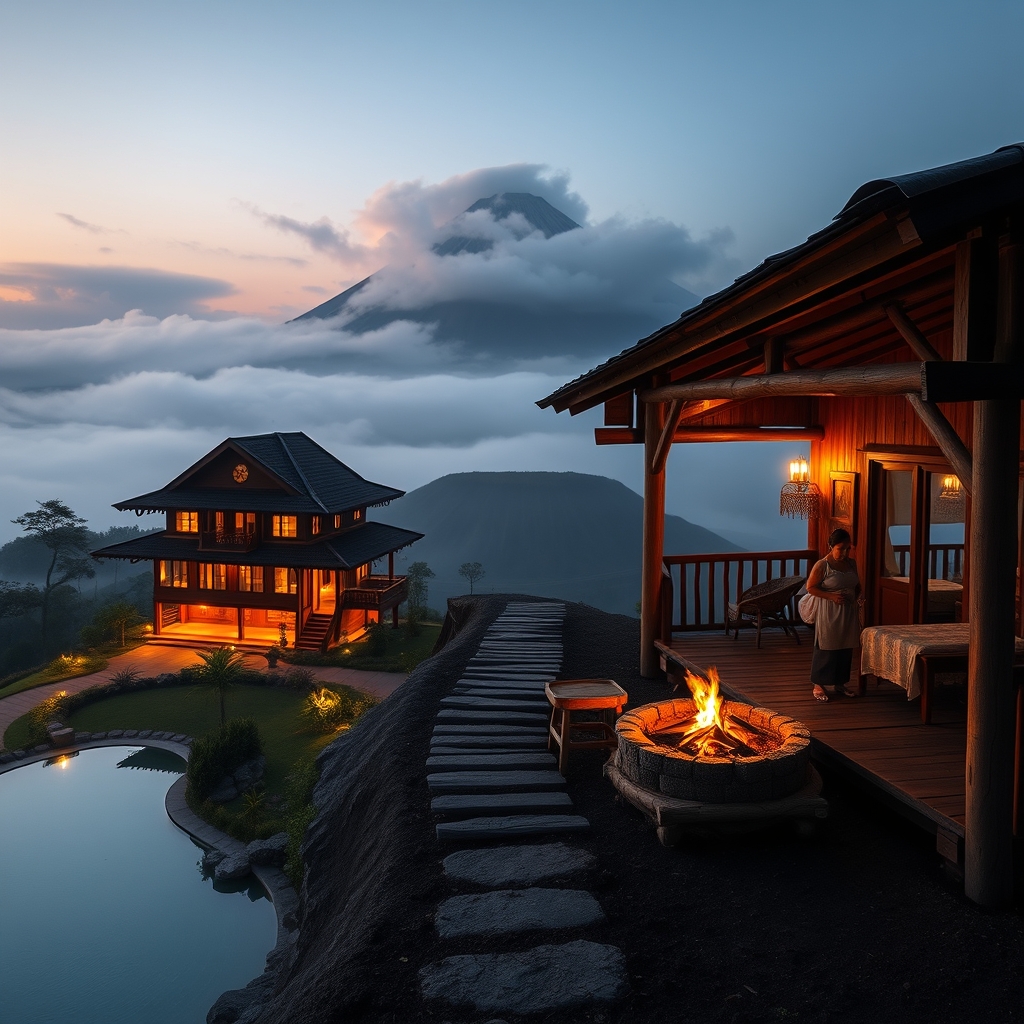
Bromo’s allure is undeniable—a raw, volcanic landscape that beckons travelers with promises of otherworldly sunrises and the quiet majesty of its caldera. Yet, the experience of Bromo is not solely shaped by its natural grandeur; it is equally defined by the spaces in which travelers rest, reflect, and recharge. The accommodations dotting this highland region are more than mere shelters; they are curated environments that influence perceptions, expectations, and ultimately, the memory of the journey. To understand Bromo’s hospitality landscape is to peel back layers of design, intent, and execution, revealing a spectrum where luxury and authenticity often collide—or coalesce—in unexpected ways.
The Illusion of Seamless Luxury: Plataran Bromo and Jiwa Jawa’s Calculated Elegance
Plataran Bromo Resort and Jiwa Jawa Resort Bromo occupy the upper echelons of Bromo’s accommodation hierarchy, where the promise of luxury is not just met but meticulously engineered. These properties do not merely offer comfort; they sell an experience of effortless indulgence, where every detail—from the warm lighting to the curated art adorning the walls—is designed to transport guests into a world of refined escapism. The architecture leans into Javanese aesthetics, with teak wood, batik motifs, and open-air pavilions that blur the line between indoor and outdoor spaces. Yet, this is luxury with a caveat: it is luxury as performance, a carefully staged authenticity that risks feeling more like a theme park than a genuine connection to place.
Plataran’s sprawling villas, for instance, are undeniably stunning, but their grandeur can feel disproportionate to the rugged simplicity of Bromo’s surroundings. The resort’s infinity pool, while offering breathtaking views of the caldera, also serves as a reminder of the disconnect between the curated experience and the untamed landscape beyond. Jiwa Jawa, on the other hand, leans harder into the narrative of cultural immersion, with its traditional joglo structures and locally sourced furnishings. Yet, even here, the line between authenticity and commodification blurs. The resort’s spa, offering treatments inspired by Javanese rituals, is a masterclass in experiential marketing—but is it a genuine homage to tradition, or merely a polished facsimile designed to appeal to the Western traveler’s romanticized notions of the East?
The Middle Ground: Where Comfort Meets Compromise
For travelers unwilling to commit to the extremes of luxury or budget, Bromo’s mid-range offerings present a pragmatic alternative. Hotels like Bromo Terrace Hotel and Lava View Lodge occupy this space, where the emphasis shifts from opulence to functionality. These properties are not designed to dazzle but to deliver: clean rooms, reliable service, and a vantage point from which to witness Bromo’s natural wonders. The trade-off, however, is a certain blandness—a lack of distinct character that can leave guests feeling as though they could be anywhere, not in the shadow of one of Indonesia’s most iconic landscapes.
Bromo Terrace Hotel, for example, offers panoramic views of the caldera, but its interiors are generic, with the kind of neutral-toned decor that could belong to any chain hotel in any city. Lava View Lodge fares slightly better, with its rustic charm and proximity to the crater, but even here, the experience is more about convenience than connection. These properties cater to the traveler who prioritizes practicality over poetry, but in doing so, they risk becoming forgettable waypoints in an otherwise unforgettable journey.
The Budget Paradox: Authenticity in the Age of Instagram
At the opposite end of the spectrum lie Bromo’s budget accommodations—hostels, homestays, and capsule hotels that promise affordability but often deliver something far more valuable: authenticity. Properties like Cafe Lava Hostel and GubuKNDeso Homestay Bromo thrive on the energy of communal spaces, where travelers swap stories over shared meals and the lines between guest and host blur. These are places where the experience is not curated but lived, where the imperfections—creaky floors, patchy Wi-Fi, the occasional cold shower—become part of the charm.
Yet, even here, the specter of commodification looms. The rise of Instagram has transformed budget accommodations into backdrops for the perfect shot, with travelers flocking to places like Whiz Capsule Hotel Grand Bromo not for the experience but for the aesthetic. The capsule hotel’s futuristic pods, while undeniably photogenic, are a far cry from the traditional homestays that once defined Bromo’s budget scene. The question then becomes: are these properties still authentic, or have they simply traded one form of performance for another?
The Homestay Revival: A Return to Roots
Amidst the influx of modern budget options, a handful of homestays are quietly reclaiming the spirit of Bromo’s early days. De Potrek Bistro And Homestay and Istana Petani Hotel offer a glimpse into a different kind of travel—one where the focus is not on luxury or even comfort, but on connection. These properties are often family-run, with hosts who double as guides, storytellers, and friends. The rooms may be simple, the amenities basic, but the experience is rich in ways that no five-star resort can replicate.
At De Potrek, for instance, guests are invited to participate in the daily rhythms of life on the mountain—helping with the harvest, learning to cook traditional dishes, or simply sitting by the fire as the host shares tales of Bromo’s past. This is travel stripped of pretense, where the value lies not in what is provided but in what is shared. It is a reminder that authenticity is not a product to be packaged and sold but a lived experience, one that requires vulnerability, openness, and a willingness to step outside the comfort of the familiar.
The Invisible Thread: How Accommodations Shape the Bromo Narrative
The accommodations of Bromo are more than just places to sleep; they are active participants in the storytelling of the region. Each property, whether by design or default, contributes to the larger narrative of what Bromo is and what it can be. The luxury resorts sell a vision of Bromo as a destination of refined escape, where nature is a backdrop to human ingenuity. The mid-range hotels present it as a place of practical adventure, where the focus is on the journey rather than the stay. The budget accommodations, meanwhile, offer a counter-narrative—one where Bromo is not just a place to visit but a place to belong.
Yet, the most compelling stories are not found in the extremes but in the spaces in between, where the lines between luxury and authenticity, performance and reality, blur. These are the places where travelers are forced to confront their own expectations, to question what they truly seek from their journey. In the end, Bromo’s accommodations do not just shape the traveler’s experience—they reveal the traveler’s soul, reflecting back the desires, contradictions, and unspoken longings that brought them to the mountain in the first place. The challenge, then, is not to find the perfect place to stay but to find the place that challenges you to see Bromo—and yourself—anew.