Bromo’s Hidden Gems: A Critical Examination of Underrated Stays Beyond the Usual Suspects
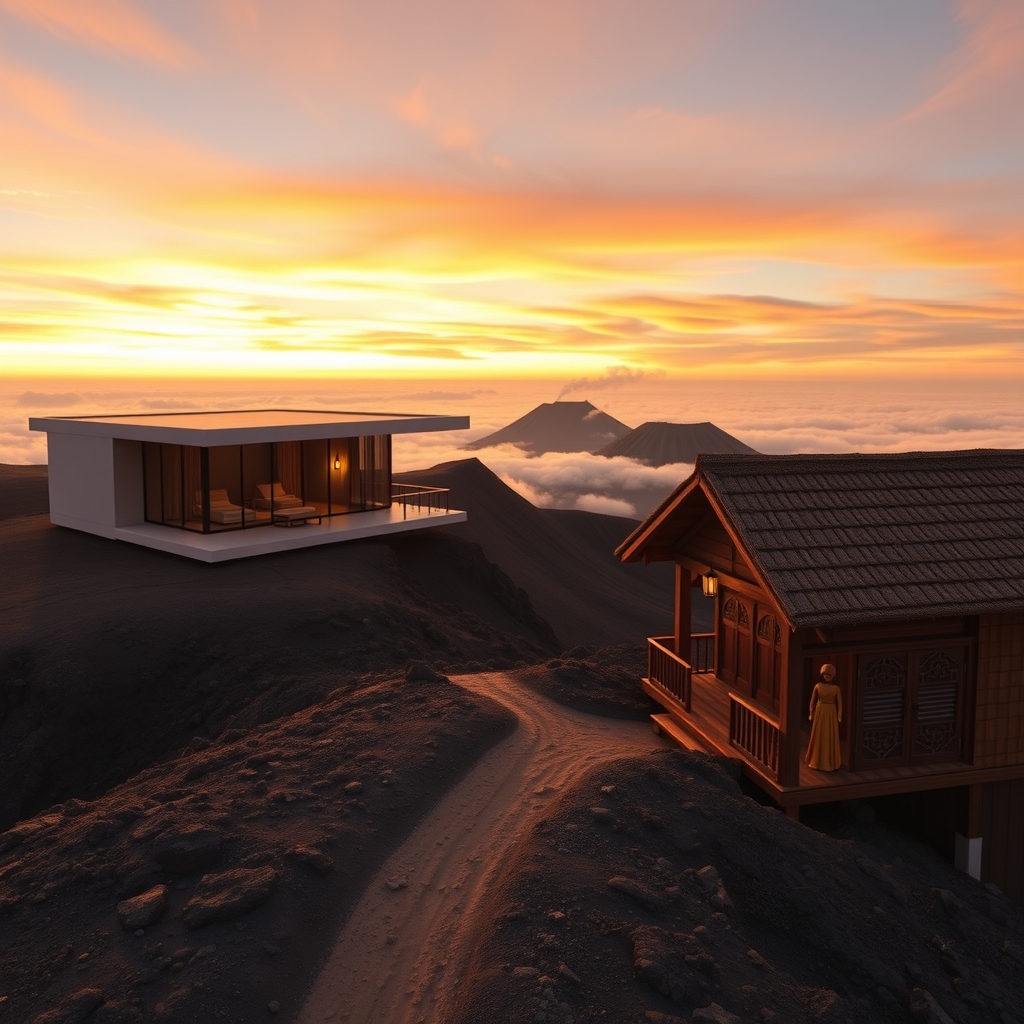
Bromo’s accommodation landscape is often reduced to a handful of well-trodden names—Plataran Bromo Resort, Jiwa Jawa Resort Bromo, and Lava View Lodge dominate the conversation, their Instagram-worthy facades and polished service packages overshadowing the quieter, more idiosyncratic options that dot the region. Yet, it is in these overlooked spaces where the true character of Bromo’s hospitality reveals itself, unfiltered by the expectations of mass tourism. The question is not whether these underrated stays can compete with their luxury counterparts, but whether they offer something far more valuable: an unmediated connection to the land and its people.
The Illusion of Scarcity in Bromo’s Lodging Market
There is a pervasive myth that Bromo’s accommodation options are limited to either high-end resorts or spartan homestays, with little in between. This binary framing ignores the rich diversity of mid-tier and boutique properties that occupy the space between luxury and authenticity. Hotels like Bromo Terrace Hotel and Swiss Belinn Malang defy this oversimplification, offering refined comfort without the pretension of their more famous neighbors. The former, perched on the edge of the caldera, provides panoramic views without the ostentatious pricing, while the latter delivers urban sophistication just a stone’s throw from Bromo’s wild heart. These properties prove that the region’s hospitality is not a zero-sum game—there is room for both opulence and understatement.
The Homestay Paradox: Intimacy vs. Isolation
Homestays in Bromo occupy a curious middle ground, promising intimacy with local culture while often delivering isolation from the very experiences travelers seek. GubuKNDeso Homestay Bromo and De Potrek Bistro And Homestay exemplify this tension. The former, nestled in a traditional Javanese village, offers a glimpse into rural life, but its remote location can feel like a gilded cage for those unprepared for the logistical challenges of exploring the region. The latter, with its on-site bistro, attempts to bridge the gap between convenience and authenticity, yet its curated menu risks sanitizing the raw, unpolished charm that defines Bromo’s culinary scene. The lesson here is clear: homestays are not a monolith, and their value lies in the traveler’s willingness to engage with their limitations as much as their strengths.
Design as a Silent Narrator of Bromo’s Identity
Architecture in Bromo’s lodgings is rarely neutral. It either amplifies the region’s dramatic landscapes or competes with them, and the results are telling. Jiwa Jawa Resort Ijen, though not in Bromo proper, sets a benchmark for how design can harmonize with nature, its minimalist structures blending seamlessly into the volcanic terrain. Closer to Bromo, Lereng Bromo Hotel adopts a similar philosophy, its terraced design echoing the contours of the land. In contrast, Grand Whiz Hotel Bromo and Whiz Capsule Hotel Grand Bromo prioritize efficiency over aesthetics, their modular layouts catering to budget-conscious travelers but offering little in the way of narrative depth. The most successful properties are those that treat design as a dialogue with the environment, not a distraction from it.
The Capsule Conundrum: Innovation or Gimmick?
The rise of capsule hotels in Bromo, epitomized by Whiz Capsule Hotel Grand Bromo, reflects a broader trend in travel—one that values affordability and novelty over space and privacy. For solo travelers or those passing through, these pods offer a pragmatic solution, but their appeal is inherently limited. The claustrophobic confines and lack of communal spaces can make them feel more like a last resort than a destination. That said, their existence speaks to Bromo’s evolving demographics, where budget-conscious backpackers and digital nomads are increasingly shaping the market. Whether this trend will endure or fade remains to be seen, but for now, it underscores the region’s adaptability to shifting traveler preferences.
The Unseen Cost of Convenience
Proximity to Bromo’s main attractions often comes at a price, not just financially but experientially. Hotel Santika Pasuruan and Bromo Park Hotel Probolinggo are prime examples of properties that trade on their location, offering easy access to the caldera but little else. Their generic interiors and formulaic service models strip away the sense of place, leaving guests with a transactional experience that could just as easily unfold in any other tourist hub. The irony is that the very convenience these hotels promise can end up distancing travelers from the essence of Bromo. The most memorable stays are not those that handhold visitors to the crater’s edge, but those that challenge them to explore beyond it.
Bromo’s hospitality is not a static entity but a living, breathing ecosystem, where each property—whether a five-star resort or a roadside homestay—contributes to the region’s collective identity. The danger lies in reducing this complexity to a set of clichés, where luxury is equated with quality and authenticity with discomfort. The truth is far more nuanced, and the most rewarding experiences often emerge from the spaces in between. To dismiss the underrated is to miss the point entirely: Bromo’s soul is not found in the spotlight, but in the shadows, where the unexpected thrives.