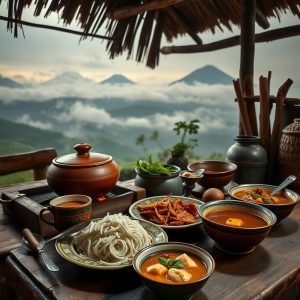
The Unspoken Poetry of East Java’s Highland Tables
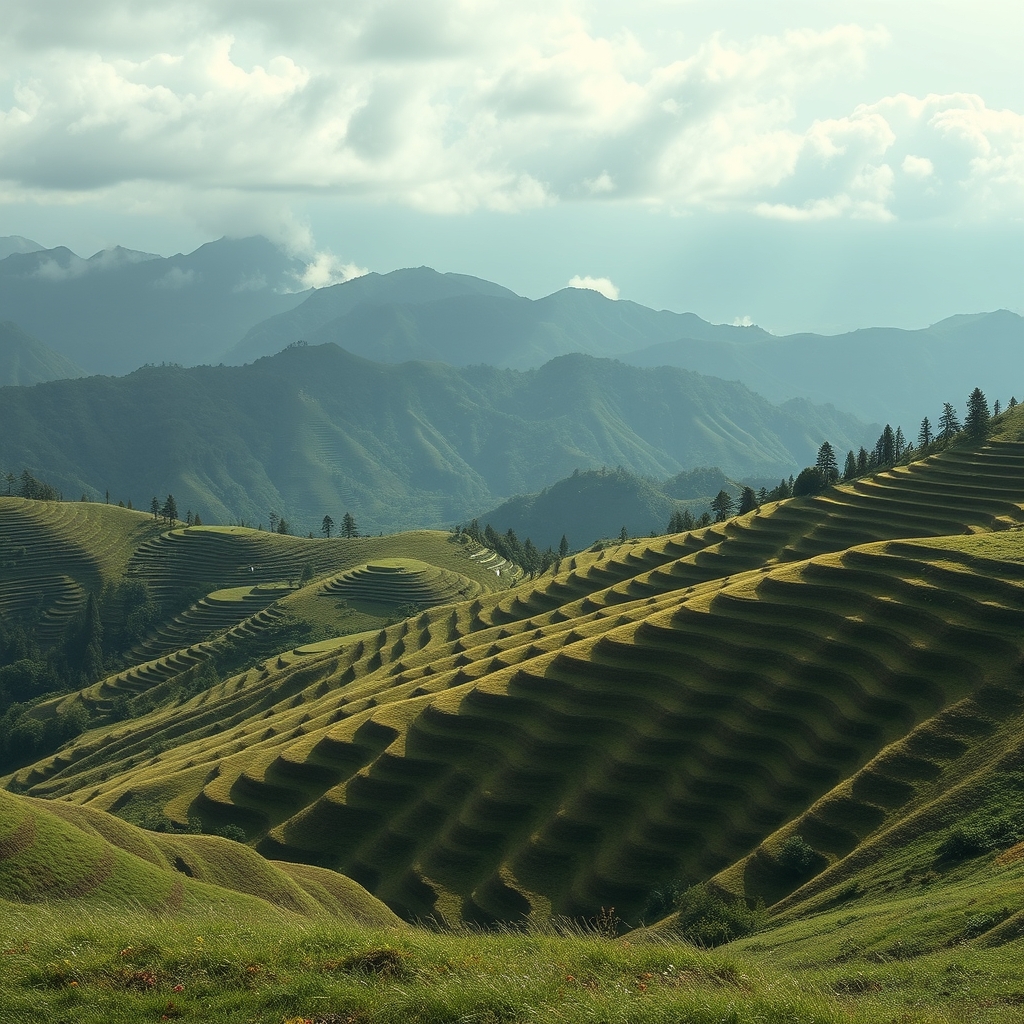
The first time the mist curled around my ankles like a living thing, I knew I had stepped into a world where food was not just sustenance, but a language of its own. The highlands of East Java do not shout their flavors; they murmur them, like secrets passed between old friends over steaming bowls and crackling fires. Here, every dish carries the weight of altitude, the chill of dawn, and the quiet resilience of a land shaped by volcanoes and time.
The Embrace of Smoke and Steam
There is something sacred about the way the Tenggerese prepare their meals, as if each ingredient is an offering to the gods who dwell in the peaks. Nasi Aron Tengger, wrapped in banana leaves and kissed by the smoke of wood fires, arrives at the table like a gift. The rice, fragrant with coconut milk and the faintest hint of pandan, is more than food—it is a hug from the highlands, a reminder that even in the cold, there is warmth to be found. The first bite is always a revelation: the grains, tender yet distinct, cling to one another like old memories, while the smoky aroma lingers on the tongue, a whisper of the earth itself.
And then there is Wedang Pokak Bromo, a drink that tastes like liquid gold on a frosty morning. The ginger, sharp and bright, cuts through the sweetness of palm sugar, while the warmth of the brew seeps into your bones. It is the kind of drink that makes you believe in magic, or at least in the kind of magic that happens when simple ingredients are transformed by patience and care. I remember sipping it on a balcony in Cemoro Lawang, watching the sun rise over Mount Bromo, the steam from my cup mingling with the mist that rose from the caldera below. In that moment, I understood why the Tenggerese call this place home—it is not just the land, but the way the land feeds you, body and soul.
The Crunch of Memory
If the highlands had a soundtrack, it would be the crackle of Keripik Kentang Sukapura and the sizzle of Bledhus Jagung Tengger. These are not just snacks; they are the soundtrack of a thousand small joys. The potato chips, thin and golden, shatter between your teeth with a sound like laughter, their saltiness a perfect counterpoint to the sweet, smoky corn that has been roasted over open flames until its kernels pop with flavor. I once bought a bag of these from a street vendor in Sukapura, his hands rough from years of tending fires, his smile as warm as the snacks he sold. We ate them together, standing by the side of the road, the wind carrying the scent of pine and distant rain. There was no need for words—some flavors speak for themselves.
And then there is Mendol Tempe Krispi, a dish that defies expectation. Tempeh, that humble staple of Indonesian cuisine, is transformed into something almost ethereal when coated in a spiced batter and fried to a perfect crisp. The first time I tried it, I was in a small warung in Malang, the kind of place where the walls are thin and the laughter of strangers feels like an invitation. The tempeh arrived at my table still crackling, its golden crust giving way to a tender, nutty interior. I ate it with my fingers, the way it was meant to be eaten, and for a moment, I forgot everything but the taste—the heat of the chili, the earthiness of the tempeh, the crunch that echoed in my ears like a distant drumbeat.
The Comfort of Shared Plates
There is a reason why the highlands of East Java are known for their communal feasts. Food here is not meant to be eaten alone. It is meant to be passed around, shared, savored in the company of others. Sate Gebug Malang, with its skewers of marinated meat grilled over charcoal, is a dish that demands to be eaten with friends. The name itself—gebug, meaning