The Lullaby of Smoke and Starch: How East Java’s Highland Comforts Cradle the Weary Soul

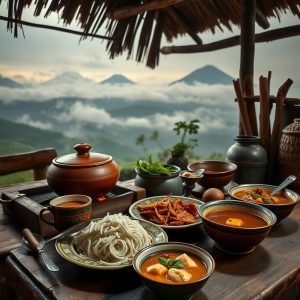
The first time I tasted Wedang Pokak Bromo, the night was so cold it felt like the air itself had turned to glass. The steam curled from the clay mug in delicate tendrils, carrying the scent of ginger, palm sugar, and something deeper—something like the slow exhale of the earth after a long day. I wrapped my fingers around the warmth, and for the first time in weeks, the shiver in my bones stilled. It wasn’t just a drink; it was a lullaby, hummed in the language of spices and slow-brewed patience.
The Alchemy of Simplicity
There is a quiet magic in the way the highlands of East Java transform the simplest ingredients into something that feels like a benediction. Take Sawut Kabut Bromo, for instance—a dish so unassuming it might slip past you in a crowded market. Grated cassava, steamed until it surrenders its stiffness, then tossed with grated coconut and a whisper of salt. No fanfare, no elaborate techniques. Yet when you take that first bite, the texture is a revelation: soft but resilient, like the land itself after a rain. It is food that asks nothing of you but to be present, to let the flavors unfold without hurry.
Or consider Bledhus Jagung Tengger, the roasted corn of the Tenggerese. The kernels are charred just enough to blister their edges, releasing a smoky sweetness that lingers like a half-remembered dream. The farmers who sell them by the roadside don’t bother with fancy displays. The corn speaks for itself, its husks still clinging like the last stubborn leaves of autumn. You peel them back slowly, savoring the anticipation, and when you finally take a bite, the heat of the embers still clings to the grains, as if the fire itself has been trapped inside.
The Language of Longing
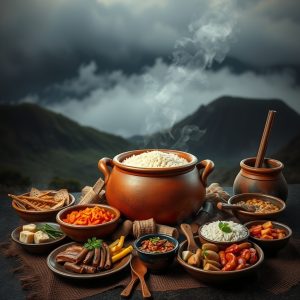
Some dishes are not just eaten; they are remembered. Nasi Aron Tengger is one of them. The rice is cooked with coconut milk and pandan leaves until it becomes something almost sacred—a fragrant, golden mound that steams with the promise of comfort. It is served with iga pasir, ribs slow-cooked in a spiced broth until the meat falls from the bone like a secret being shared. The first time I had it, I was far from home, and the taste was so familiar it made my chest ache. It wasn’t just the flavors; it was the way the dish seemed to wrap around me, like an old blanket pulled from the back of a closet, still carrying the scent of a place I hadn’t realized I missed.
Then there is Cwie Mie Malang, a dish that feels like a story told in two acts. The noodles, chewy and slick with oil, are served with a rich, savory broth and topped with minced pork or chicken. But the real magic lies in the cwie—the crispy fried wonton skins that shatter at the slightest touch, releasing a burst of texture that contrasts with the softness of the noodles. It is a dish of contrasts, of crunch and slip, of heat and cool, and it leaves you with the sense that you’ve just witnessed something beautiful and fleeting, like the first light of dawn breaking over the mountains.
The Silence of Shared Meals
In the highlands, meals are often eaten in silence, or at least in a silence that feels sacred. There is no need for words when the food itself is so eloquent. Soto Kraksaan Probolinggo, for example, is a dish that demands your full attention. The broth, rich with turmeric and lemongrass, is poured over tender chunks of chicken and rice, then garnished with fried shallots and a squeeze of lime. Each spoonful is a revelation, a balance of heat and tang, of softness and crunch. You don’t talk while eating it; you listen. To the broth, to the crackle of the shallots, to the quiet rhythm of your own breath.
And then there is Rawon Nguling Pasuruan, a dish so dark it looks like it has been steeped in the night itself. The broth, made from keluak nuts, is earthy and complex, with a depth of flavor that feels almost primal. It is served with rice and a side of sambal, and when you take your first bite, it is as if the flavors have been waiting for you, patient and unhurried. The highlands have a way of making time feel elastic, and dishes like this are a reminder that some things cannot be rushed.
The Warmth of the Hearth
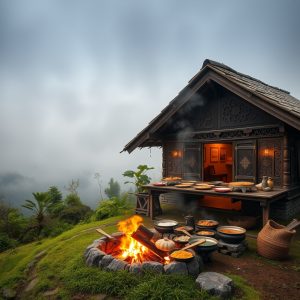
Perhaps that is why the highland comforts of East Java feel so essential—they are not just food, but a return to something fundamental. Angsle Hangat Bromo, a sweet porridge made with glutinous rice balls, sweet potatoes, and coconut milk, is the kind of dish that feels like a hug. It is served steaming hot, often in the early hours of the morning, when the mist still clings to the valleys like a shroud. The first sip is like stepping into a warm bath; the tension in your shoulders melts away, and for a moment, you are weightless.
Even something as simple as Jagung Bakar Penanjakan—grilled corn slathered in butter and chili—carries this same quality of quiet comfort. The corn is charred over an open flame, its kernels popping with each turn, and when you bite into it, the heat of the embers mingles with the sweetness of the corn, creating a flavor that is both bold and tender. It is the kind of food that makes you close your eyes and sigh, not because it is extravagant, but because it is exactly what you needed.
The highlands of East Java do not shout their flavors; they whisper them, like a secret shared between old friends. Whether it is the smoky depth of Bakso Bakar Malang, the crispy crunch of Keripik Kentang Sukapura, or the creamy richness of Orem Orem Tempe, each dish carries with it the weight of the land, the patience of the people, and the quiet resilience of a place where the air is thin and the flavors are deep. To eat here is not just to nourish the body, but to feed the soul—to remember, if only for a moment, what it feels like to be truly, deeply home.
And so, when the night grows long and the cold seeps into your bones, you reach for another mug of Wedang Pokak Bromo, letting the steam curl around your face like a promise. The flavors wrap around you, warm and familiar, and for a little while, the world feels soft and kind. The highlands have a way of doing that—of turning the simplest things into something sacred, something worth holding onto.